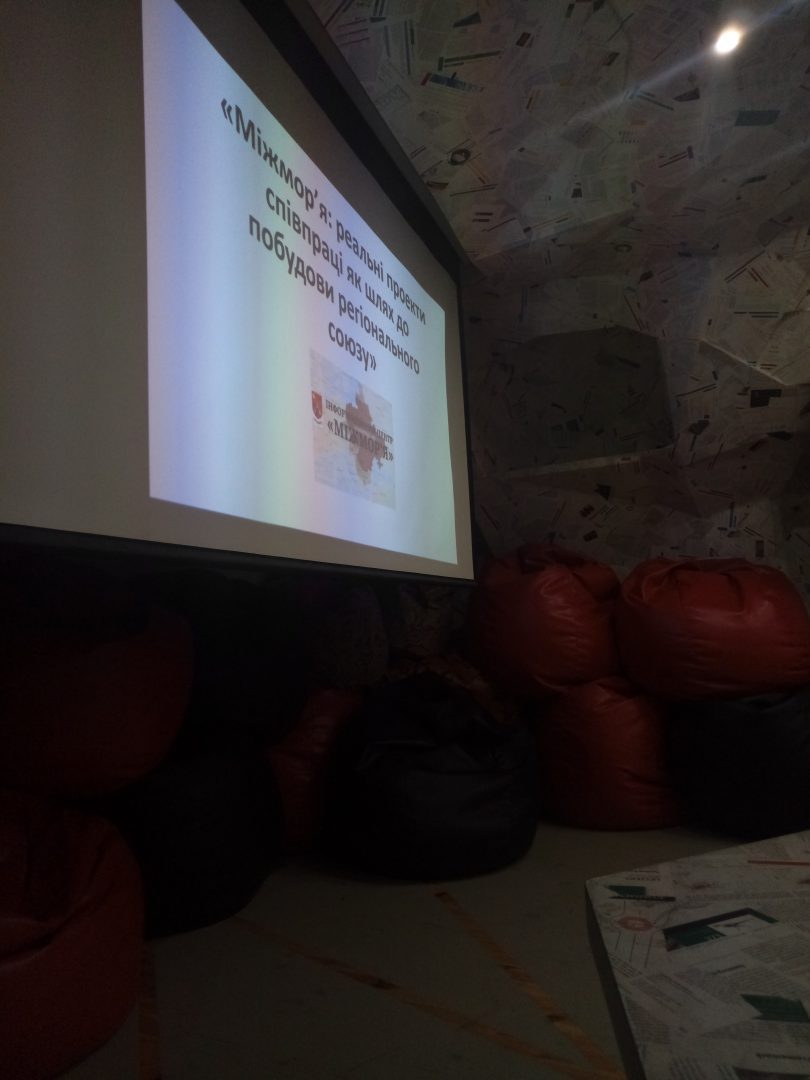
The event was organized by the Intermarium Information Center with the support of the United Union of Patriots of Ukraine.
Within the framework of the event, individual projects of cooperation between the Baltic-Black countries were discussedOrsk region, which could potentially be united on the basis of the Intermarium geopolitical union.
First of all, the main emphasis was placed on the need to create an effective infrastructure union. The first joint projects in the economy, according to experts, can be implemented in infrastructure projects (road construction, oil/gas pipelines, etc.). A pool of intergovernmental companies similar in structure to the companies that manage gas pipelines could also be created. China could be a potential investor, as it has recently shown interest in infrastructure projects in Eastern Europe.
According to the roundtable participants, security policy is an equally important area for cooperation in the region. In particular, it was proposed to create a conventionally named “Anti-Moscow Security Pact” that would unite the efforts of the military and security forces of the countries of the region to counter threats from the Russian Federation. On the other hand, according to the participants of the event, a private military company (PMC), which would be created similar to Blackwater, could be responsible for regional security in Eastern Europe, on the border with Russia. The shareholders of such a company could be the member states of the Baltic-Black Sea Union (BSU), which could commit to its financing. NATO, or individual countries of the North Atlantic Alliance, could also finance the activities of this structure. Thus, in the event of an armed conflict, a private military company would be involved in the fighting, which would not trigger Article 5 of the NATO Charter.
Among a number of projects that could be implemented on the way to building the Baltic-Black Sea Union, the event discussed the need to create a “Bank of the Intermarium”. This institution could provide loans and bank guarantees for investment projects. The share in the authorized capital of the banking institution could be distributed according to the size of the GDP of each BSU member state. Similar projects in other regions have proven to be effective.
According to the roundtable participants, the countries of the Baltic-Black Sea region could potentially implement joint cultural projects and create an Information Center. The functional responsibilities of such an institution should include: monitoring the information space; analyzing the current situation and developing proposals; implementing countermeasures to neutralize threats; and taking strategic preventive measures based on the developed analytical proposals. The information center can be launched as a private or public initiative, which will later become an intergovernmental project.
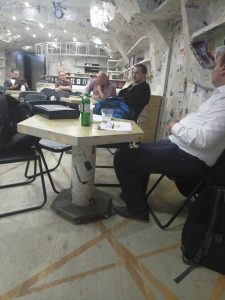
The roundtable was attended by Oksana Yurynets, MP from the Petro Poroshenko Bloc faction, Head of the Subcommittee on Regional and Cross-Border Cooperation between Ukraine and the EU, Verkhovna Rada Committee on European Integration; Oleksandr Nikonorov, journalist at Depo.ua, analyst at Team 4 Ukraine, expert at IC “Intermarium”; Hryhoriy Perepelytsia, Ph, Director of the Institute of Foreign Policy at the Diplomatic Academy of the Ministry of Foreign Affairs of Ukraine; experts of the IC “Intermarium” Yuriy Mindyuk and Yuriy Honcharenko and others. 
As a reminder, the Intermarium Information Center was established in April 2017 to inform the general public about the idea of the Intermarium, a geopolitical union of the Baltic-Black Sea region, primarily Ukraine, Poland, the Baltic States, and potentially Belarus, Moldova, Georgia, Romania, and others. In the situation of security, economic, and political challenges from Russia, these countries can at least carry out in-depth coordination of actions, and at best, conduct joint defense, economic, and political activities to protect their sovereignty. The Center was initiated by the Foundation for Democratic Initiatives.
On June 8, a roundtable discussion “The Baltic-Black Sea Union: from myth to reality” was held in Kyiv at the Nash Format club.