


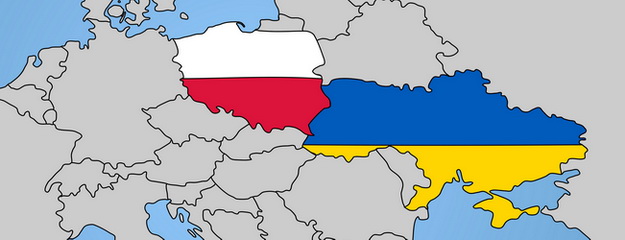
Polish society, just like Ukrainian society, but unlike Russian society, is not a coherent and unanimous society.
However, unlike Ukrainians, just as in the 1918-1920s, all strata and political currents of Polish society managed to unite in the 1990s around the idea of European integration and NATO membership.
However, the first ideological differences were not long in coming soon after these international priorities were achieved, in the second half of the 2000s. Thus, the right-wing conservative wing in Polish society has been consistently strengthening, embodied by the now dominant Law and Justice party in Poland. In its first elections since its creation in 2001, the party received 9.5% of the vote, and subsequently gained at least 27%. In 2005, the party gained power as part of a coalition, and in 2015, with a result of 27%, it managed to form a one-party government.
Despite its declared conservatism and moderate nationalism, the party’s ideology and populist orientation is strongly influenced by the Kresovyak community and other radical chauvinists and historical revisionists, whose anti-Ukrainian rhetoric is only getting stronger. Let’s recall the statements of both PiS leader J. Kaczynski and Polish Foreign Minister W. Waszczykowski about the impossibility of Ukraine “joining the EU with Bandera.”
However, the pent-up ideological and political differences have come to light now: thousands of protesters are protesting in Poland against the judicial reform, which was passed by the parliament, according to which the Supreme Court will be subordinated to the Ministry of Justice. The protests have a distinctly liberal character and are accompanied by EU flags.
This internal Polish situation is very important for Ukraine in the medium term. In fact, the alternatives for Ukraine in Polish-Ukrainian relations are gaining relevance again: to continue to focus on PiS and the right-wing conservatives, to try to make peace with them at the cost of certain concessions, or to wait “until the body of the enemy floats across the Vistula” and to build communication with the pro-European Liberal Democrats, who will sooner or later take power in Poland.
How can we not recall the geopolitical vision of Mikhnovsky, who wanted a democratic federal Russia as opposed to a strong centralized Ukraine! The same is true today – the precedents of Orban’s Hungary and Kaczynski’s Poland have shown that a pure “union of nationalisms” in Eastern Europe is hardly possible, unlike the cooperation of patriotic nationalists in Ukraine, the Baltic States, Georgia, and other countries of the hypothetical Intermarium.
However, the window of opportunity for cooperation between conservatives in Ukraine and Poland is not exhausted: the basis for such cooperation may be the issue of mutual protection of their “related minorities” in Poland and Ukraine – Ukrainians and Poles, respectively (which is quite beneficial for Poland, given the idea of the diaspora – “polonia”, but also beneficial for Ukrainians in Poland!), provided that mutual pressure on issues of historical memory and heroism is completely abandoned: we will not tell Poles whether they should glorify Pilsudski Dmowski, while the Polish side will not prevent Ukrainians from honoring Bandera-Shukhevych-Kliachkivsky. Violation of such a possible compromise would inevitably affect the situation of “related minorities” and therefore be disadvantageous for both sides.
Оleksii Kurinnyi,
Member of the Board of the Foundation for Support of Democratic Initiatives,
expert of the Intermarium Information Center.