


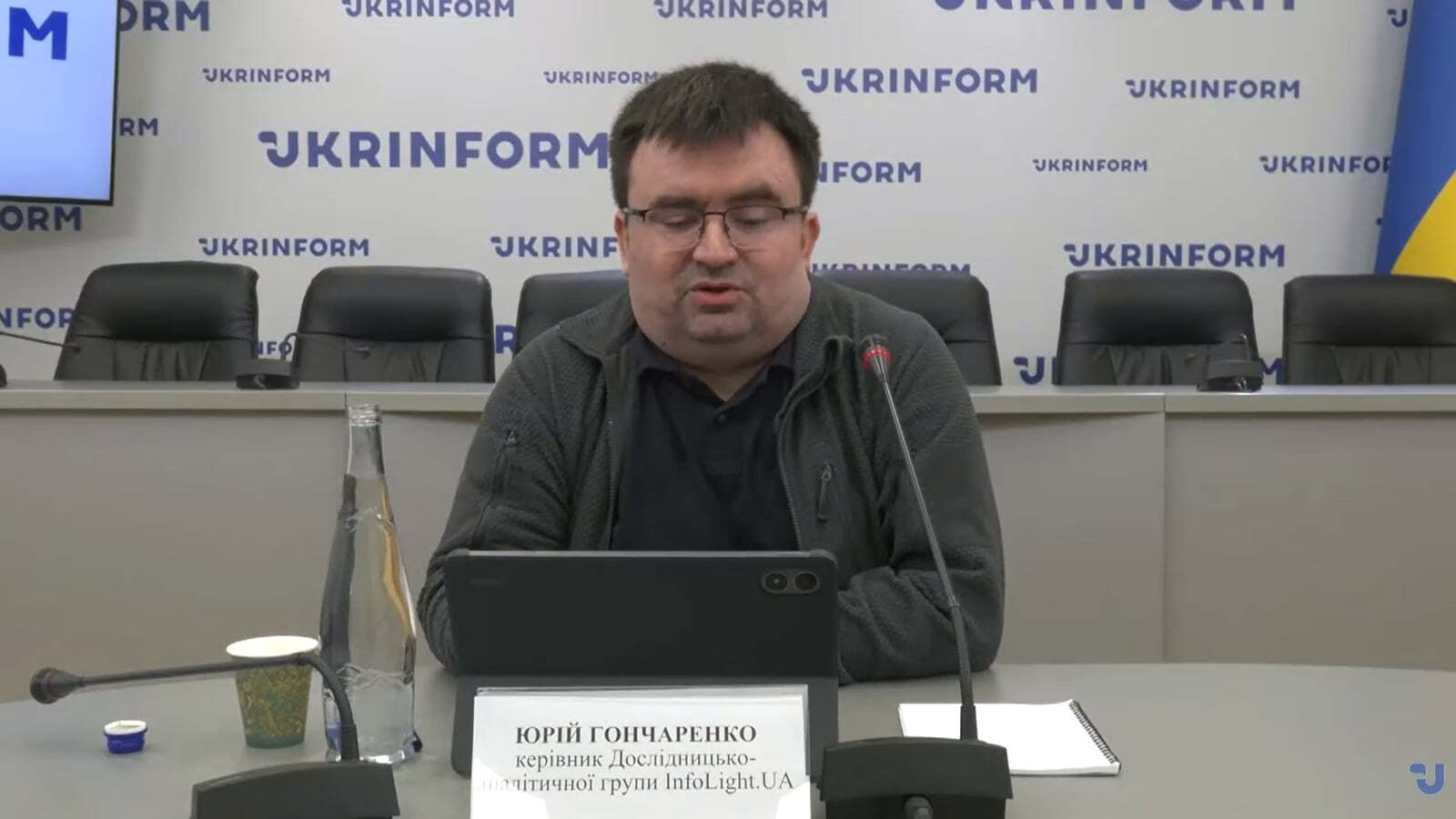
On October 9, a panel discussion titled “Staying Strong: Possible Responses by Ukrainian Society to Russia’s Cognitive Pressure” took place in Kyiv at the Ukrinform news agency. The event was organized by the NGO “Foundation for Democracy Assistance,” the Ukrainian Security Club, and the InfoLight.UA Research and Analysis Group, with support from the Hanns Seidel Foundation in Ukraine.
During the discussion, Yurii Honcharenko, the head of InfoLight.UA, presented the results of a survey conducted by the Ukrainian Security Club. Only 3% of respondents believe that the government will fulfill its promise to begin demobilization in November 2026. 85% do not believe that the military will begin to be discharged from service. Among the main reasons for planning problems, 52% of those surveyed cite poor government management.
Trust depends on clear rules
According to Honcharenko, the InfoLight.UA team has been researching the issue of mobilization since 2022. He drew particular attention to the uncertainty surrounding the terms of service and demobilization, as this directly affects the trust that both the military and the public have in the government’s decisions.
“It’s not right when a change in ministers alters the future of the people who make it possible for those ministers to hold their positions in the first place,” he emphasized.
The expert noted that officials had previously spoken publicly about clear terms of service and the possibility of demobilization. At the same time, the Cabinet of Ministers’ resolutions merely call for the Ministry of Defense to draft a corresponding bill. According to him, this raises questions about the status of previous statements and agreements with the military.
According to Honcharenko, the problem runs deeper than personnel decisions: the government must ensure long-term planning, clear rules, and alternative scenarios, especially when it comes to military personnel and their families.
Changing Attitudes Toward Mobilization
The study also noted some positive developments. The percentage of those who are aware of cases of forced mobilization among their acquaintances decreased from 36% in 2025 to 18% in 2026. The percentage of those who are categorically unwilling to be mobilized fell from 39% to 8%.
“This offers a glimmer of hope that some of the people who previously said a categorical ‘no’ at least understand that we need to prepare for the possibility that we may have to defend the country,” the expert noted.
Uncertainty as a Tool of Cognitive Warfare
The participants in the discussion emphasized that the lack of clear answers creates an information vacuum that Russia is trying to fill with its own narratives. “It would be naive to expect that Russia won’t start exploiting this point right now to demoralize the military,” Honcharenko noted.
Therefore, the government must not only make decisions but also explain possible scenarios to the public in advance. Clear action plans and open communication are just as important to resilience as the ability to withstand information attacks.