


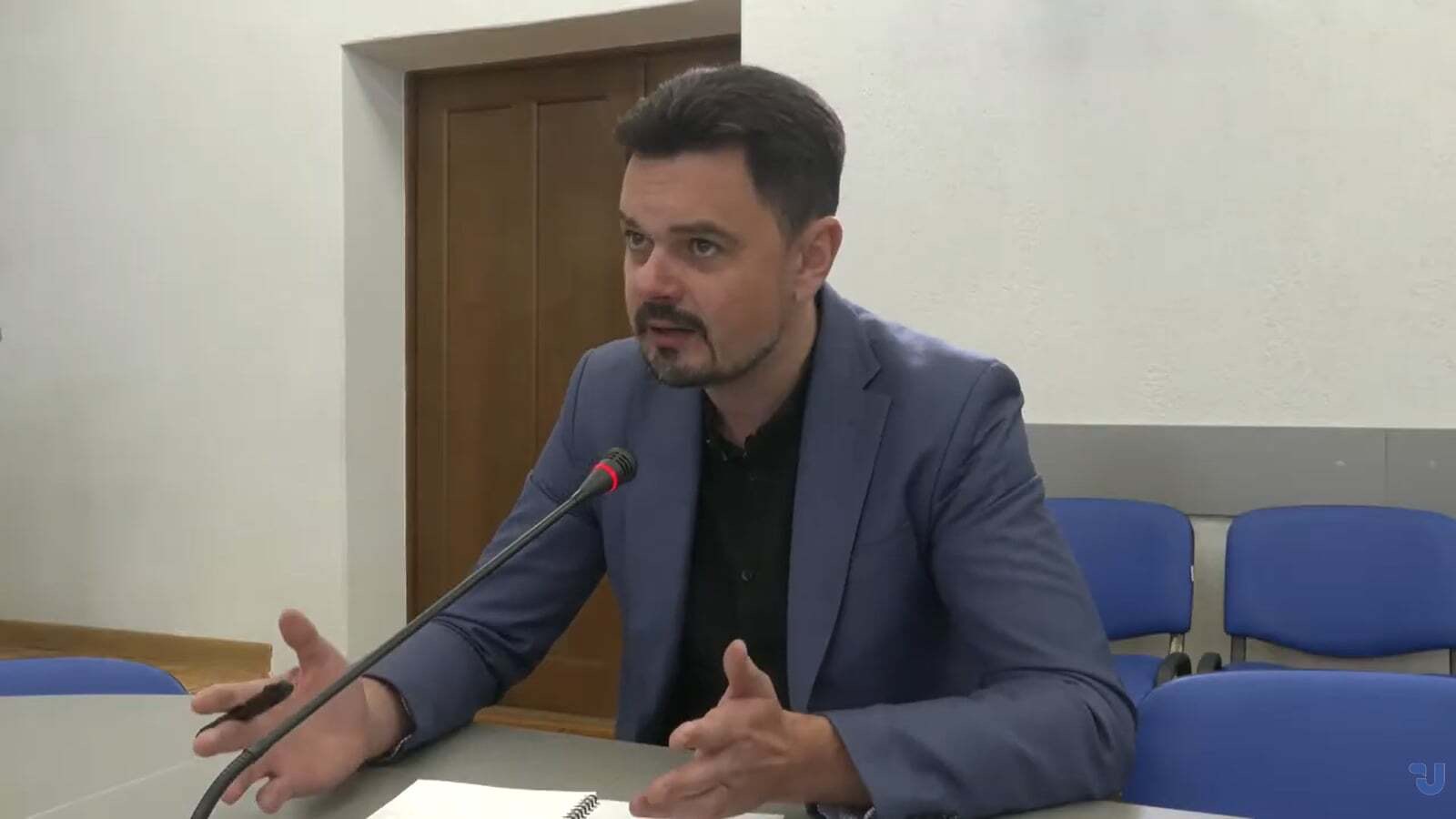
Ukrainians’ distrust of state institutions has developed over decades, and an excessive focus solely on “combating” corruption and hostile narratives could weaken the country. This view was expressed by Dmytro Zolotukhin, executive director of the Institute for the Post-Information Society, during a panel discussion titled “Staying Strong: Possible Responses by Ukrainian Society to Russia’s Cognitive Pressure.”
The event took place on October 9, 2026, at the Ukrinform News Agency in Kyiv. It was organized by the NGO “Foundation for Democracy Assistance,” the Ukrainian Security Club, and the InfoLight.UA Research and Analysis Group, with support from the Hanns Seidel Foundation in Ukraine.
The Historical Trauma of Distrust
According to Zolotukhin, Ukrainians’ attitudes toward institutions are largely shaped by their historical experience of living under constant external pressure.
“It seems to me that the problem with trust in the state stems from the fact that Ukrainian society suffers from historical trauma caused by constant pressure from the Soviet Union, the Russian Empire, and various external circumstances—which has led to the belief that any institution is your enemy,” he noted.
The expert attributed this to the issue of delegating authority. When a person transfers some of their rights to an organization, they simultaneously agree to abide by common rules, which can be perceived as a restriction on personal autonomy. Zolotukhin sees a similar logic in everyday practices, particularly in the activities of homeowners’ associations: people expect results from institutions but seek to constantly control them. According to him, this pattern of debate in Ukraine has been going on for many years without the expected results.
An Effective State as the Primary Goal
Separately, the expert questioned the approach of measuring institutional effectiveness by the number of corruption cases uncovered. Ukraine has established an extensive system of law enforcement and anti-corruption agencies, but this in itself does not guarantee effective public administration.
“We are constantly increasing our control over the system, yet the functional system somehow disappears. And this pattern keeps repeating itself in every area,” Zolotukhin said.
In his view, the key question is what the ultimate goal of anti-corruption policy should be. If it boils down to uncovering high-profile cases, the system may only demonstrate superficial activity. If, however, the goal is to build a state that provides citizens with high-quality services, criminal proceedings alone are not enough.
Therefore, the fight against corruption should not become an end in itself. It is important to have institutions that people can trust with some of their powers and from which they receive tangible results.
During the discussion, media experts also addressed the cognitive and informational challenges facing Ukrainian society and possible responses to Russian information influence.