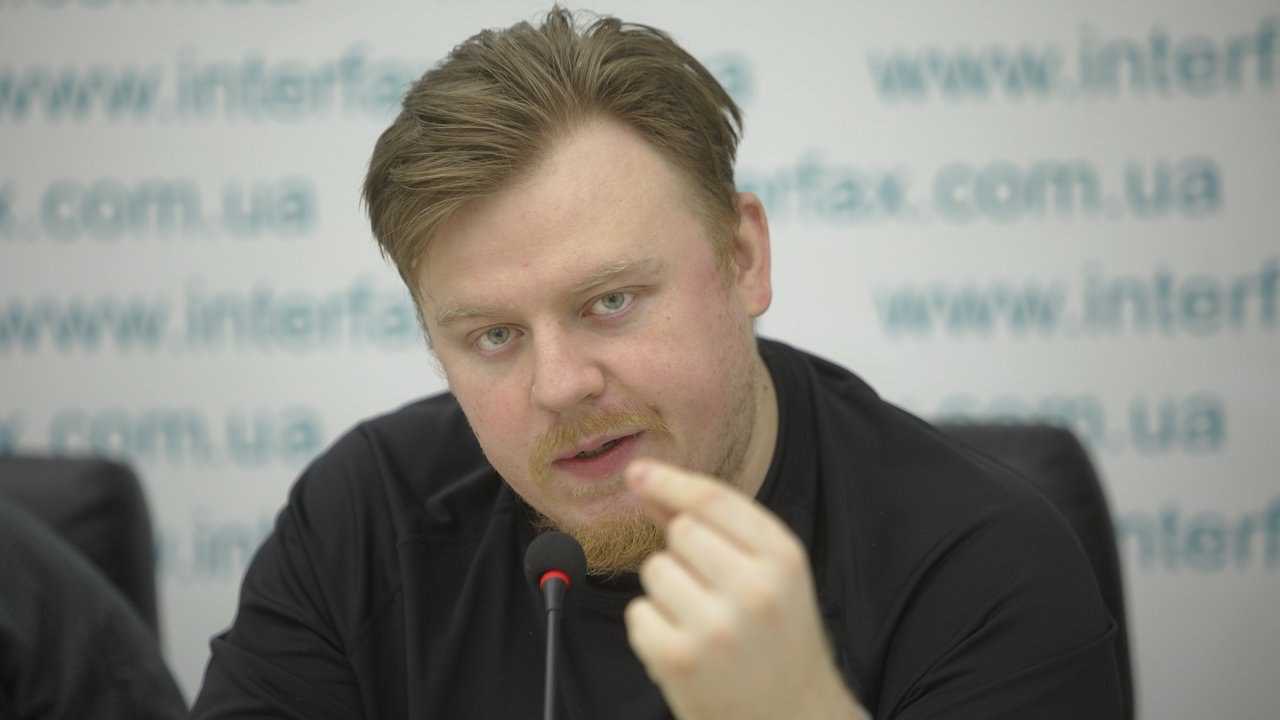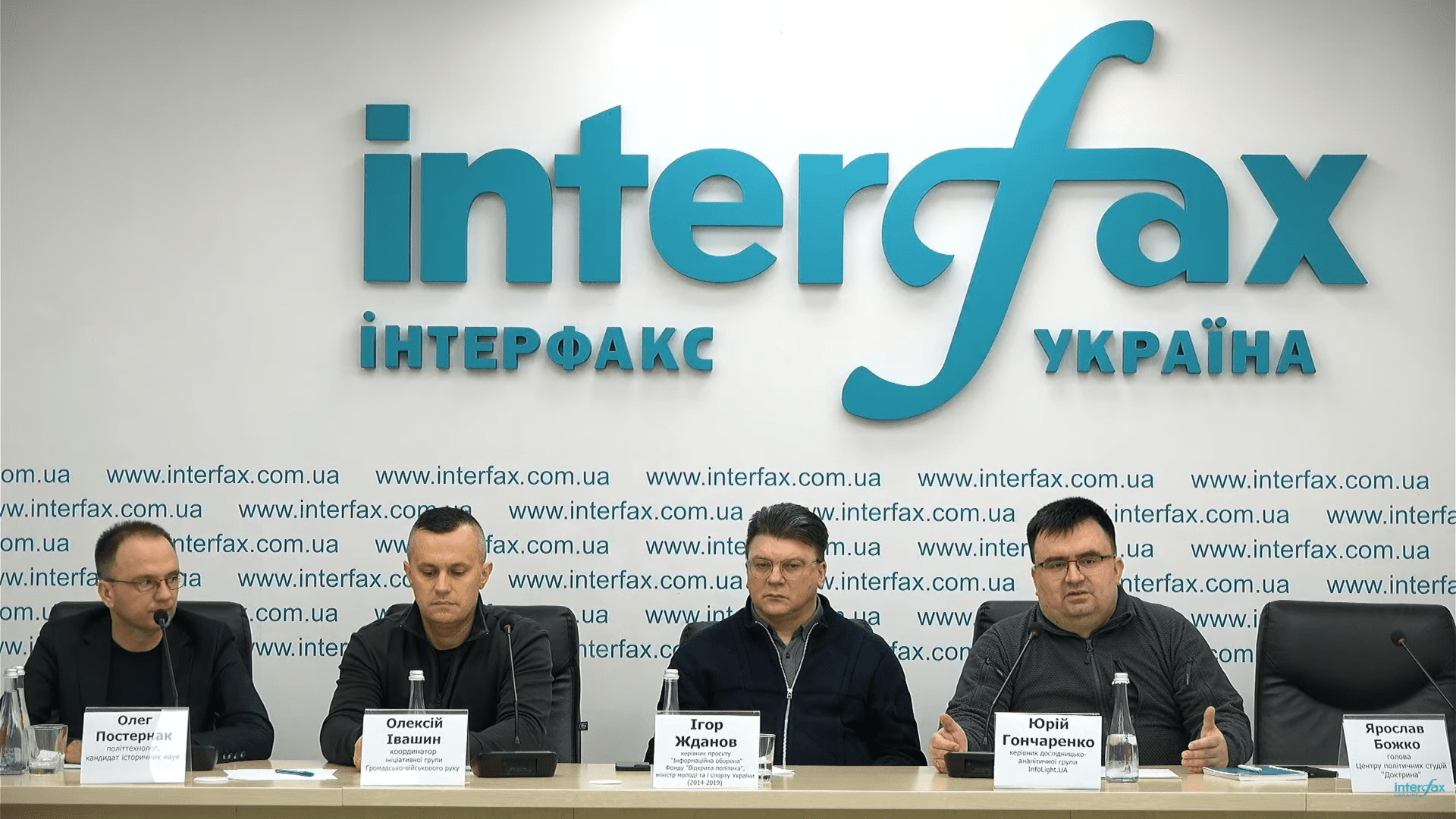
On December 5, 2025, in Kyiv, during the XIV Civil Society Forum, a panel discussion on the topic "Defensive Democracy: How Can We Maintain Defense Capability Without Sliding into Dictatorship?" took place. The event, organized by the Ukrainian Security Club together with the Foundation for Democracy Assistance, brought together representatives of government agencies, scholars, civil …
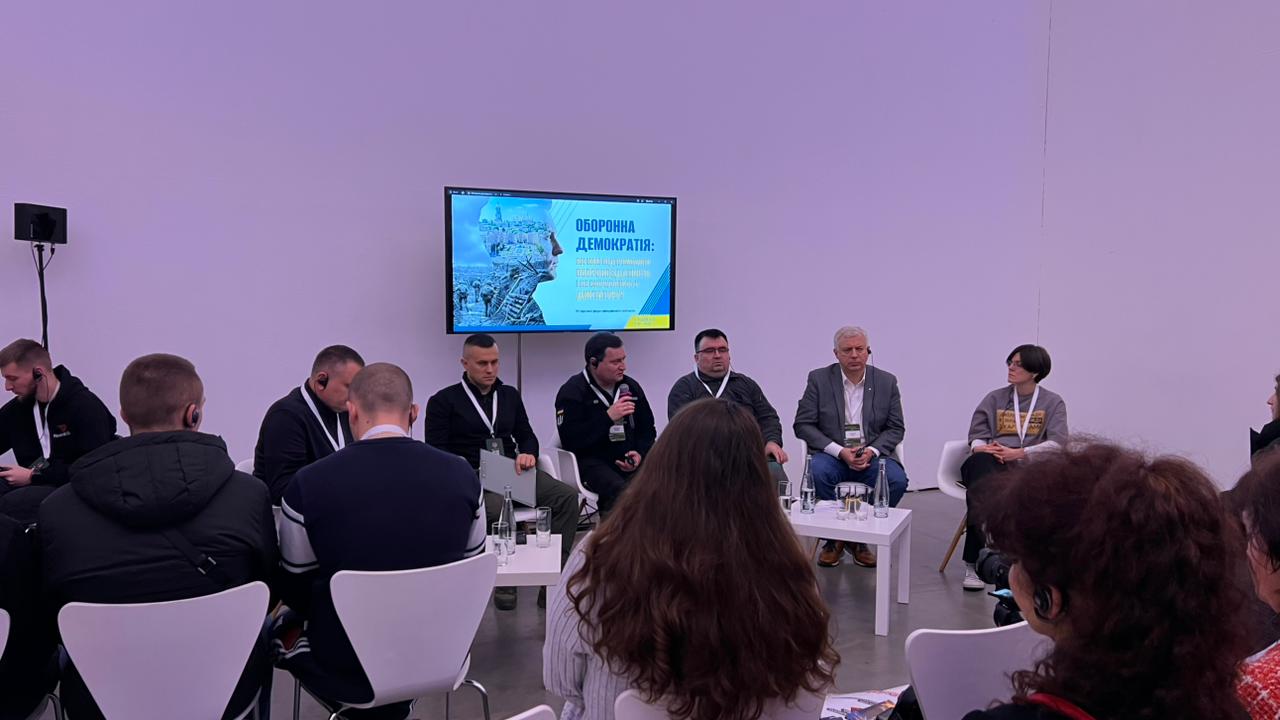
On December 5, 2025, in Kyiv, during the XIV Civil Society Forum, a panel discussion on the topic “Defensive Democracy: How Can We Maintain Defense Capability Without Sliding into Dictatorship?” took place. The event, organized by the Ukrainian Security Club together with the Foundation for Democracy Assistance, brought together representatives of government agencies, scholars, civil society, and military personnel—all those ready to discuss how to mobilize society for victory while preserving democratic values.
Ukraine—the Frontier of Global Democracy
The event moderator—writer and serviceman Anatoliy Dnistrovyi—outlined the main framework of the discussion as follows:
“Ukraine today is a true frontier of global democracy, where the key question of the 21st century is being decided: can democracy withstand systemic threats of war without losing its fundamental principles?”
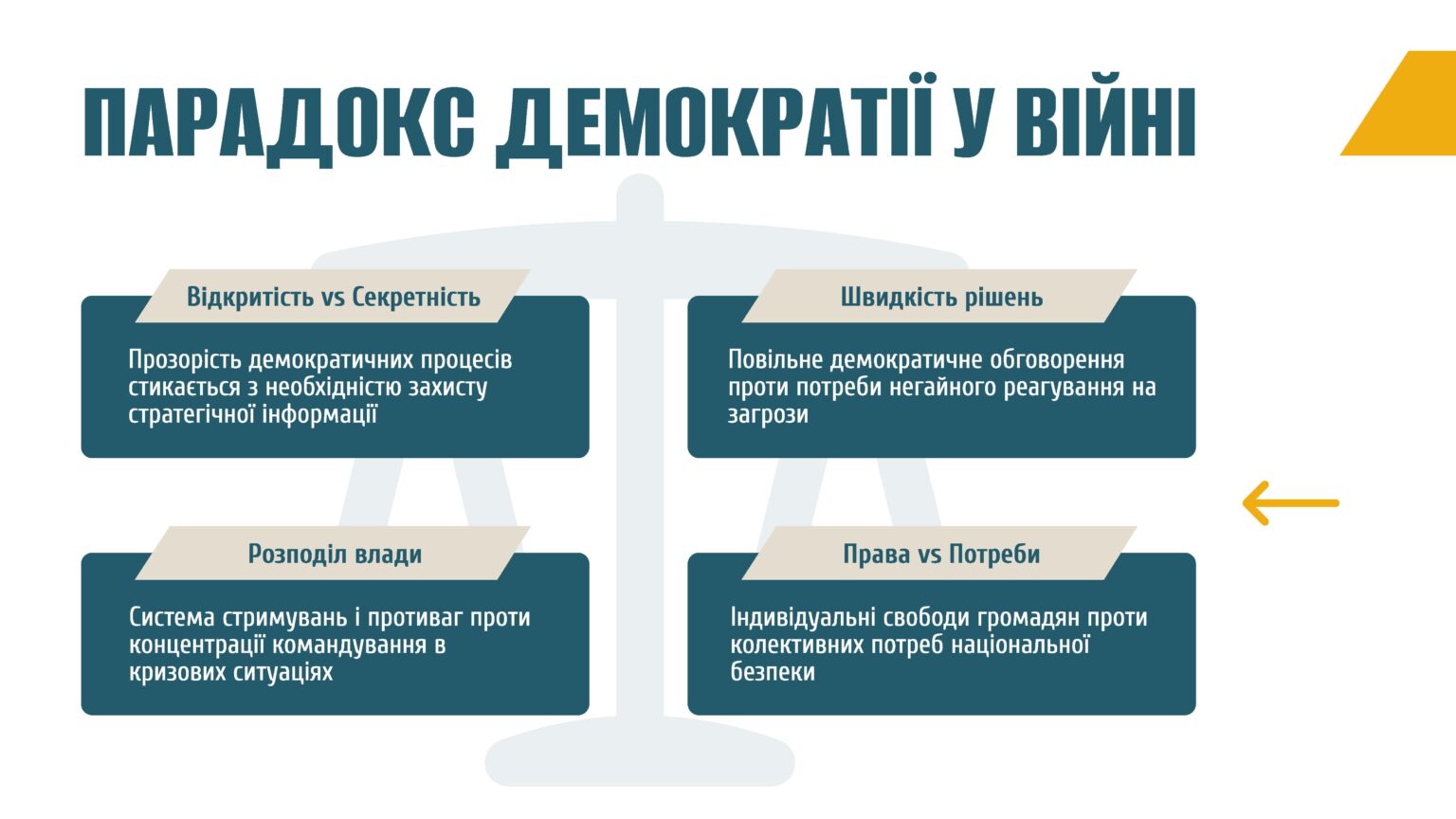
According to him, the concept of defensive democracy is not a compromise between freedom and security, but their balance. “Democracy that has learned to defend itself without transforming into its opposite.”
“Serve or Support” as a Social Strategy
During the discussion, a representative of the Main Intelligence Directorate of the Ministry of Defense of Ukraine, Andriy Yusov, proposed adopting the principle “serve or support” as the foundation of a new social contract. He emphasized:
“Today, the critically important task for Ukrainians is to build a democratic, yet mobilized and effective state, ready to confront the enemy and internal threats. The principle ‘serve or support’ must become not just a slogan, but a personal strategy for every Ukrainian family.”
Yusov stressed that defending the country is the duty of all citizens: some with weapons, some through volunteering, some by working on technological or economic development. “We cannot afford to have only part of society bear the burden of war while another lives as if nothing is happening. This creates a division that the enemy actively exploits.”
Rotational Service Model—A Response to the Mobilization Crisis
The Chairman of the Ukrainian Security Club, Yuriy Honcharenko, presented the results of the “Rotational Military Service Model” project—as a mechanism that can help break out of the “vicious cycle” of the current mobilization system. He explained:
“The existing mobilization system creates a negative feedback loop: the harder the service, the fewer people are willing to mobilize voluntarily, and the fewer new people mobilize—the harder the service becomes for current military personnel.”
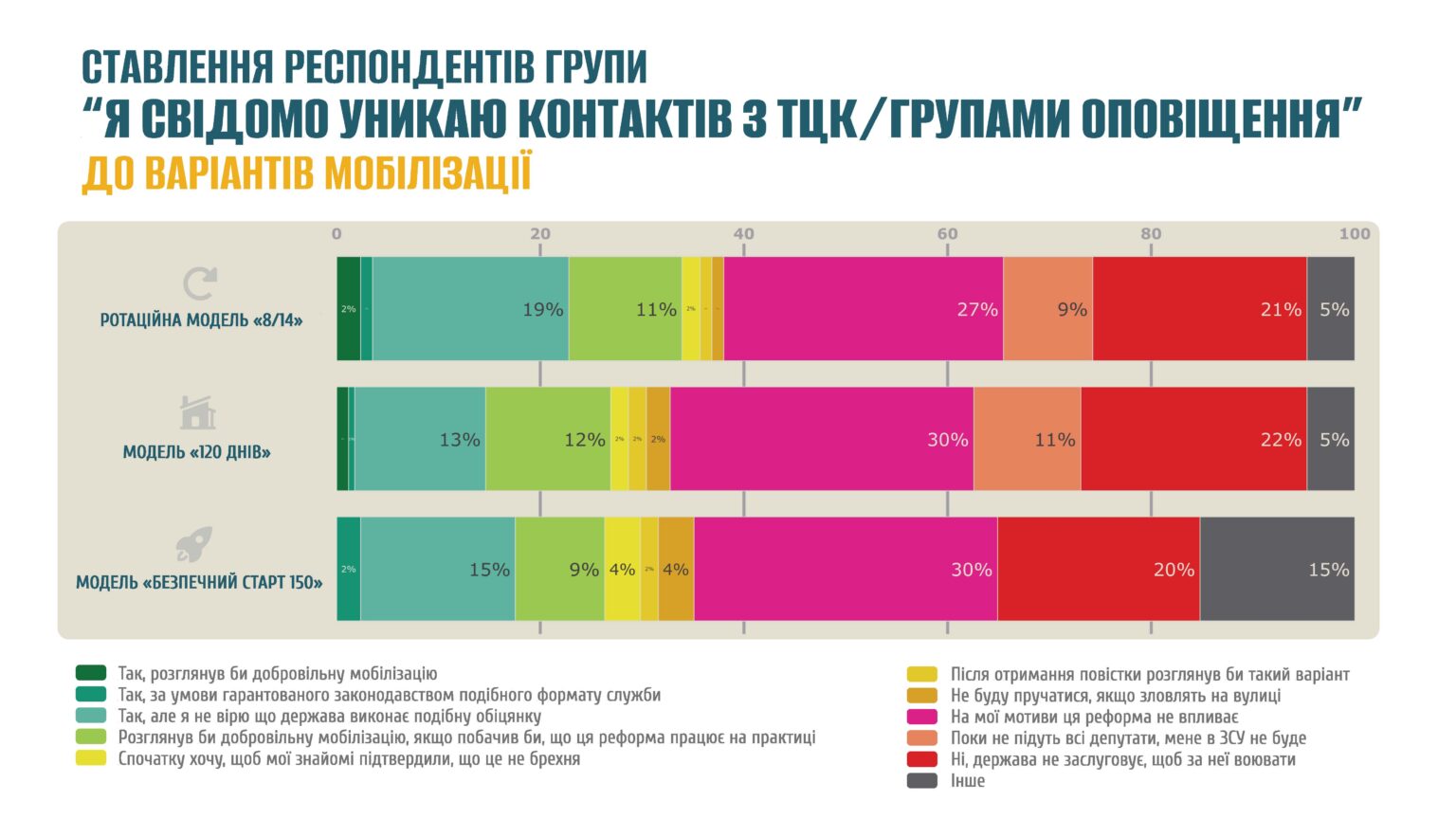
The rotational model includes: a combination of a small standing army with a large reserve, clear service terms with rotation possibilities, minimal exemptions, social support, and democratic oversight. The main goal is fair distribution of the service burden and restoration of trust between citizens and the state.
As Honcharenko noted, if people feel that the system is fair—they will be willing to serve. If not—the system’s legitimacy decreases, even if the threat is real.
Democracy During War—Not Just About Weapons
Co-coordinator of the People with Cardboard movement, Zinaida Averina, drew attention to the fact that war is not a reason to abandon the right to peacefully express one’s position and participate in public life.
“Defensive democracy involves not only mobilization for defense, but also preserving citizens’ right to express their position, influence government decisions, and monitor compliance with democratic procedures.”
According to her, peaceful protest is not a threat to the state, but a sign of a healthy democracy. A society that can debate, seek compromises, and hold authorities accountable is stronger than one where silent obedience prevails.
In the participants’ view, precisely such a model—combining defense and civic participation—will be able to unite society, overcome the divide between the front and the rear, and create a genuine national consensus.