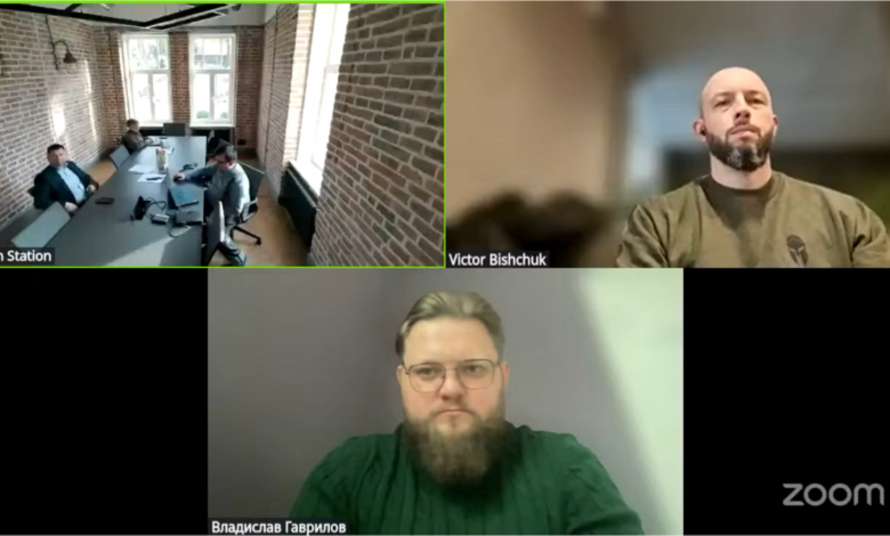
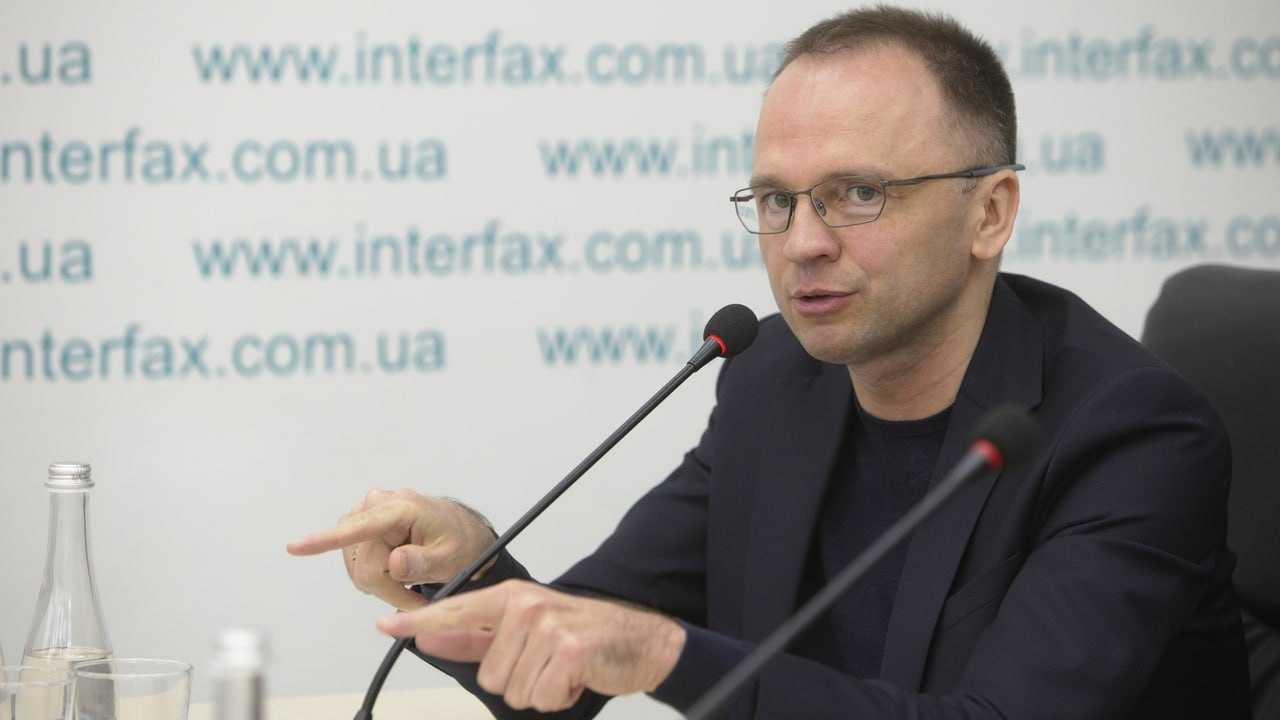
On January 29, an expert discussion in the format of a roundtable on the topic "InfoLight – 2026: Challenges and Solutions for the Information Space" took place at the press center of Interfax-Ukraine news agency. The event was part of the large-scale project "INFOLIGHT.UA – 2026," implemented by the NGO "Foundation for Democracy Assistance" with …
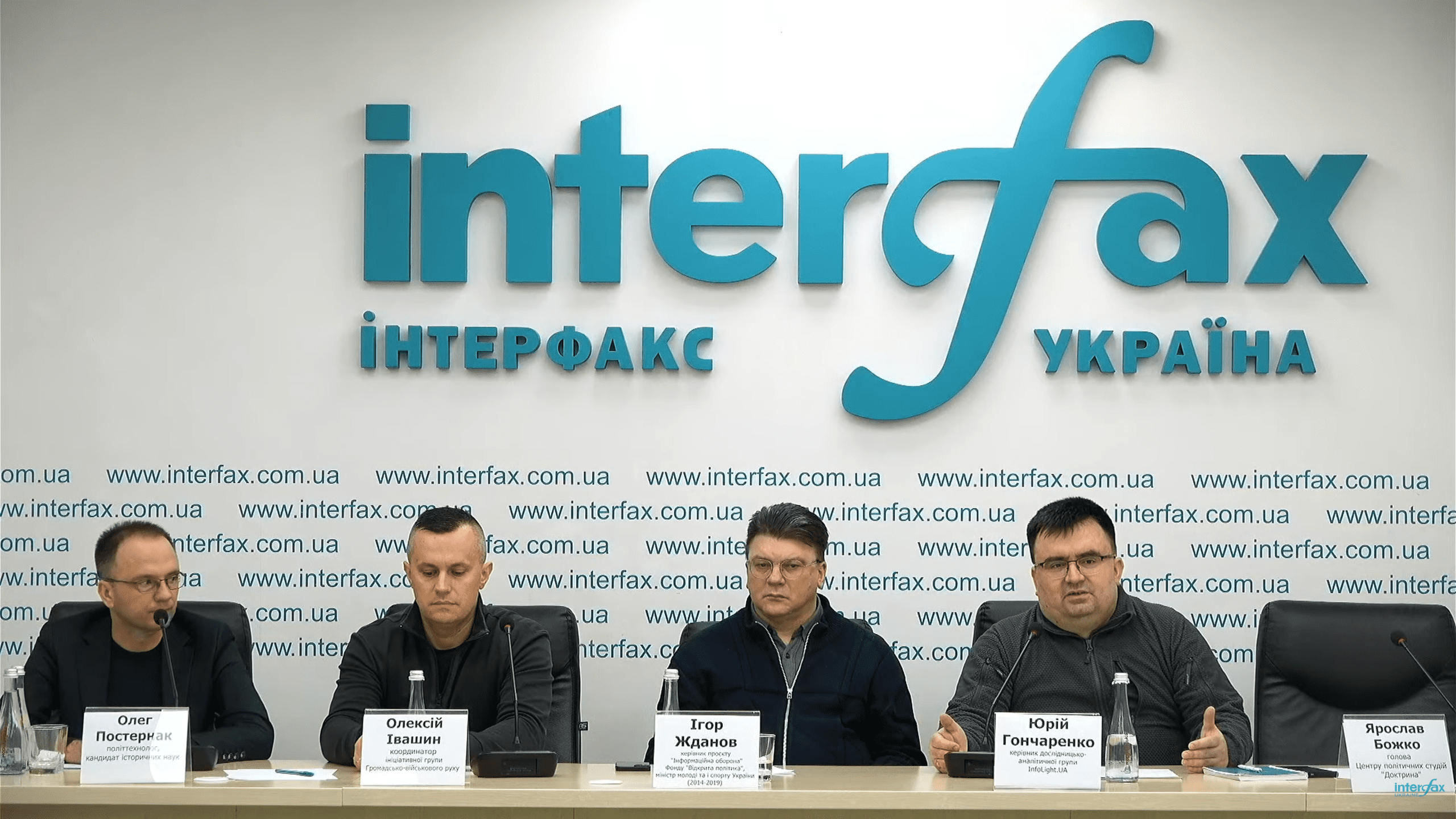
On January 29, an expert discussion in the format of a roundtable on the topic “InfoLight – 2026: Challenges and Solutions for the Information Space” took place at the press center of Interfax-Ukraine news agency. The event was part of the large-scale project “INFOLIGHT.UA – 2026,” implemented by the NGO “Foundation for Democracy Assistance” with the support of the Hanns Seidel Foundation in Ukraine. The main goal of the meeting was to analyze strategic communications, strengthen civil society resilience, and find effective mechanisms to counter Russian information and psychological operations (IPSO) in the fourth year of full-scale war.
Leading experts in the fields of security, communications, and political science participated in the discussion:
• Yurii Honcharenko – Head of the Research and Analytical Group InfoLight.UA.
• Ihor Zhdanov – Project Manager of “Information Defense” at the “Open Policy” Foundation, Minister of Youth and Sports of Ukraine (2014–2019).
• Yaroslav Bozhko – Chairman of the Center for Political Studies “Doctrine”.
• Oleksii Ivashyn – Coordinator of the initiative group of the civic-military movement.
• Oleh Posternak – Political technologist, Candidate of Historical Sciences.
War on Multiple Fronts Simultaneously
Head of the research and analytical group InfoLight.UA Yurii Honcharenko outlined the context in which Ukraine enters 2026. According to him, the country once again finds itself under unprecedented pressure, which manifests not in one dimension, but across several strategic directions at once.
“Today, Ukraine is under multidimensional pressure that encompasses the military situation at the front, a complex diplomatic track, targeted strikes on energy infrastructure, and massive information operations”
Such a concentration of challenges creates an effect of mutually reinforcing crises, where problems in one sphere quickly transform into threats in another.
Honcharenko paid special attention to the energy dimension of the war, emphasizing that the Kremlin has not abandoned its strategy of terrorizing the civilian population.
“Russian leadership continues to believe that it can break Ukraine through the destruction of critical infrastructure — through prolonged outages of electricity, heat, and water”
According to this logic, creating unbearable living conditions is meant to undermine societal resilience and provoke internal discontent with the state.
“January of this year is likely the most difficult month for Ukrainian energy infrastructure throughout the entire full-scale war”
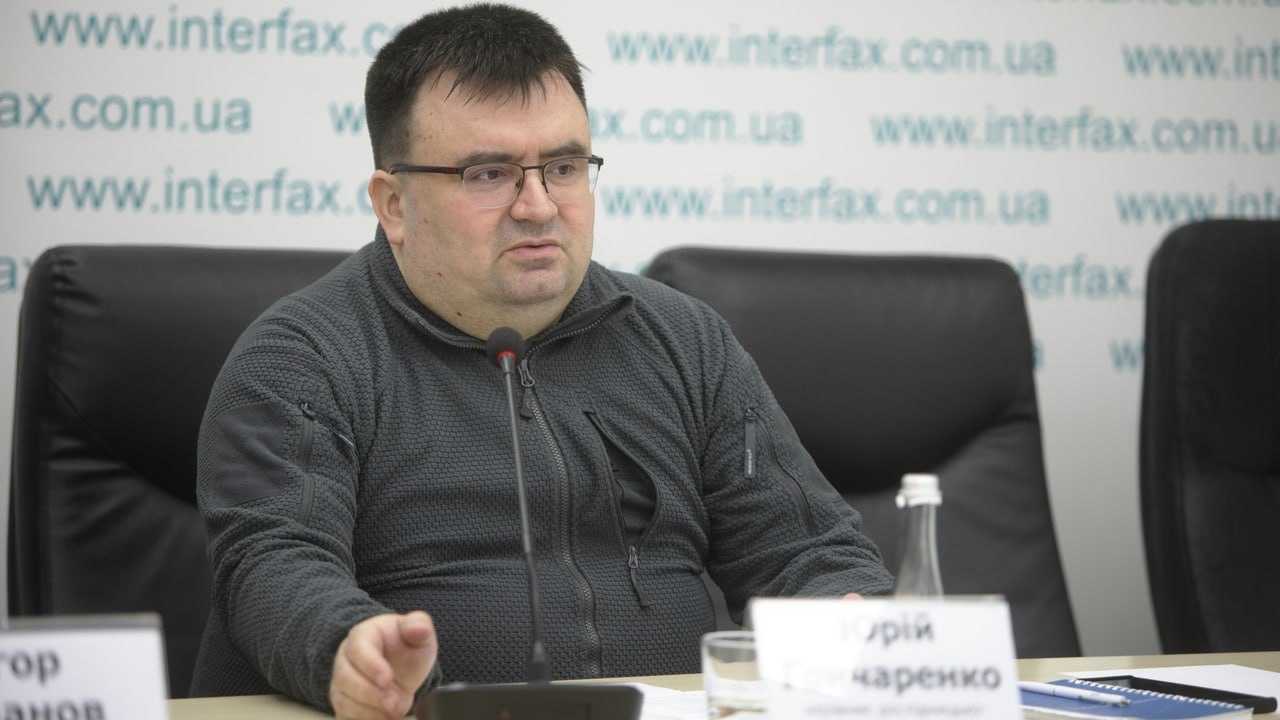
Honcharenko explained this by the cumulative effect: infrastructure is exhausted by years of attacks, while the intensity and purposefulness of Russia’s new strikes have significantly increased.
According to his assessment, the humanitarian consequences of the energy crisis—disruptions in heating, water supply, and electricity—quickly become part of the information war. Against this backdrop, the enemy attempts to push society toward internal destabilization, undermining trust in state institutions and the government’s ability to control the situation.
The “Combined Shock” Strategy: When Reality Becomes a Weapon
Coordinator of the initiative group of the civic-military movement Oleksii Ivashyn focused on the transformation of Russian information operations and the change in their logic at the end of 2025 and the beginning of 2026. According to him, the enemy gradually abandoned primitive fake generation and shifted to a significantly more complex and dangerous model of influence.
“Previously, the enemy acted primitively, simply bombarding us with fabricated stories that had nothing to do with reality. But since mid-2025, Russian tactics have become much more cunning: they abandoned empty fabrications in favor of what we call “combined shock.” Now they don’t invent problems out of thin air, but take our real pain — power outages or mobilization issues — and fan these sparks to provoke an internal explosion in society”
Its key distinction lies in the fact that information attacks are based not on fabricated narratives, but on real problems of Ukrainian society.
Ivashyn emphasized that the ultimate goal of such operations is significantly broader than creating a negative information background.
“Russians are very clearly counting on our collective endurance limit in the fourth year of the great war. Their plan is simple and cynical: take each person’s daily fatigue, their exhaustion from darkness in their homes, cold or fear for the future, and turn this emotional cocktail into a protest against their own state. In the Kremlin’s ideal scenario, we should not only take to the streets, but reach armed confrontation with each other, so that we destroy with our own hands the home that the enemy could not capture at the front”.
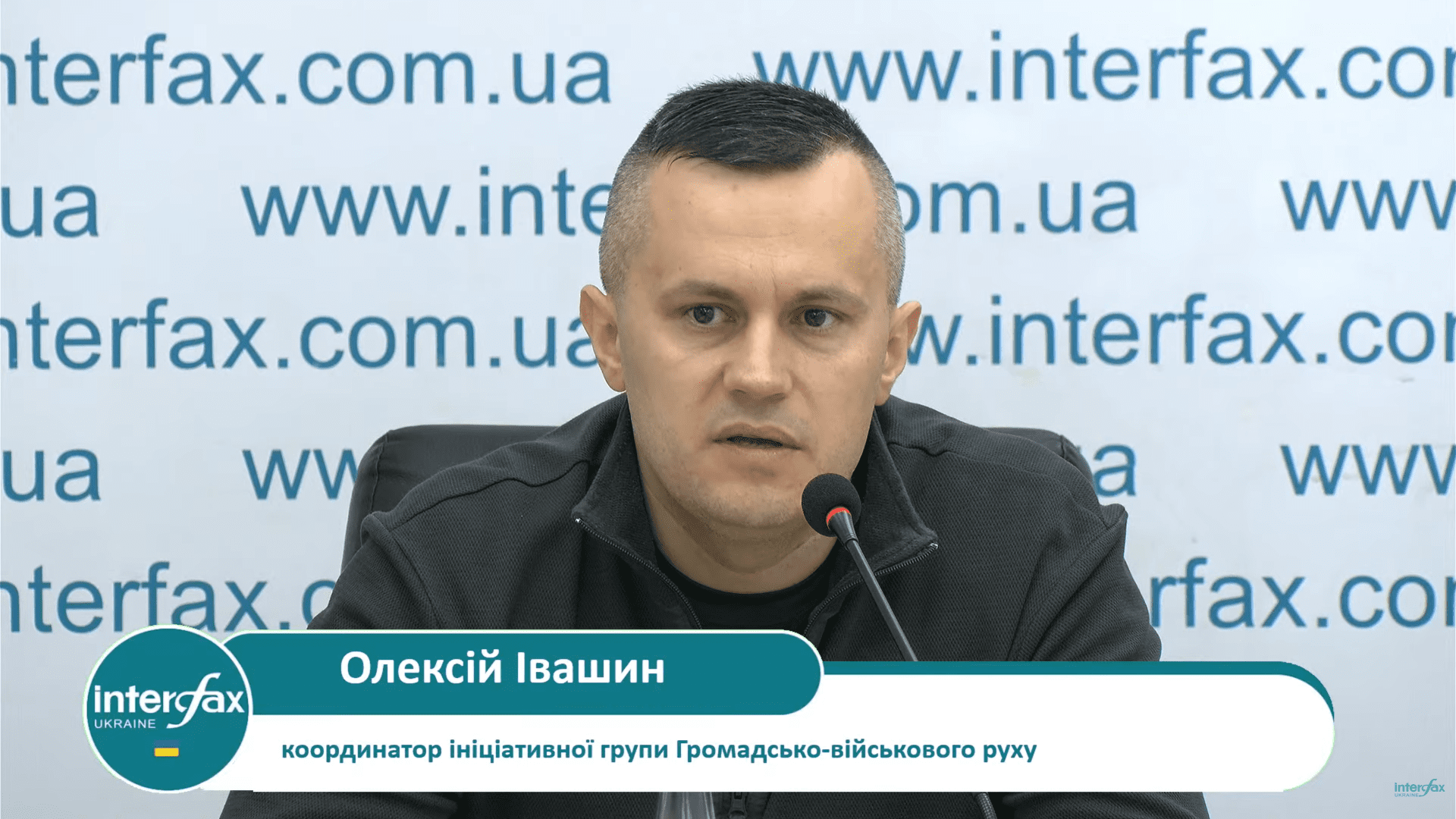
This is how, according to his assessment, Russia attempts to undermine Ukraine’s state system from within, without achieving decisive results on the battlefield.
In this context, information attacks become a continuation of kinetic warfare by other means. Real difficulties experienced by the country are deliberately amplified, emotionally intensified, and presented as signs of “complete collapse,” intended to sow distrust between different social groups and shake the internal resilience of society.
Mobilization, Cognitive Attacks, and Loss of Trust
During the discussion of mobilization, Ihor Zhdanov drew attention to the fact that Ukraine has largely lost this topic in the information space. This is not about the necessity of mobilization itself, but about how it is presented and perceived by society.
According to Zhdanov, Russia purposefully uses so-called cognitive attacks—when real problems are not explained, but deliberately intensified and presented in a distorted form.
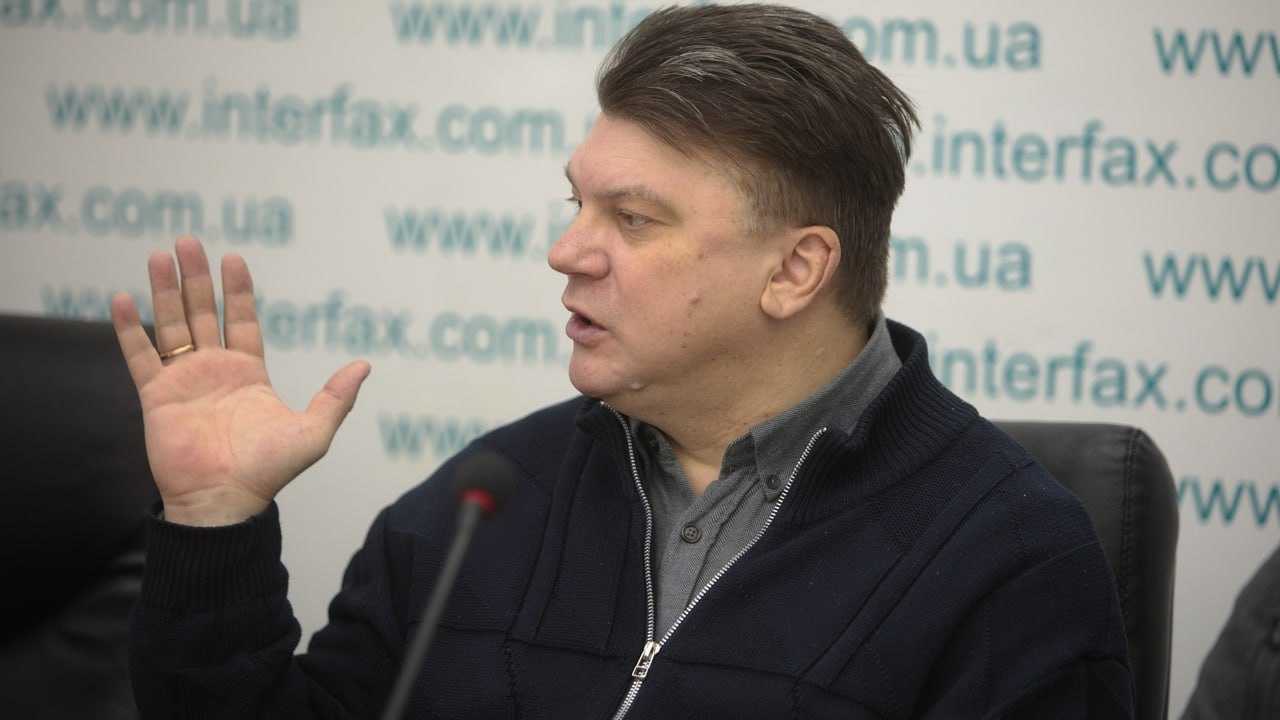
“The enemy works very insidiously: it doesn’t invent problems out of thin air, but finds what already hurts us — whether it’s problems with territorial recruitment centers or the absence of electricity in apartments. This topic begins to be methodically “pumped up” from all sides, inflating it to universal proportions. This is done with one goal: to turn off a person’s critical thinking, and instead create blind anger and hatred toward their own state and fellow citizens”
As a result, an artificial divide is formed between society and territorial recruitment centers.
Zhdanov emphasized that territorial recruitment centers in the information space are increasingly portrayed not as part of the Armed Forces of Ukraine, but as a separate hostile structure. This is how, according to him, the image of “manhunters” appeared and became entrenched, actively circulated in social networks and messengers.
Yurii Honcharenko, in turn, drew attention to the role of new technologies in this campaign. He noted that the use of artificial intelligence allowed the enemy to mass-produce videos about alleged forced mobilization.
“We have crossed the threshold where the enemy simply fabricated individual news items. Today, we are literally flooded with a stream of videos and images mass-produced by the “propaganda machine” using neural networks. The most dangerous thing is that this generated content hits people’s expectations and fears so precisely that they stop looking for evidence. Even when a video has a label about the use of artificial intelligence, viewers often ignore it, perceiving the enemy’s production as pure truth happening before their eyes”, Honcharenko explained.
Such videos spread quickly because they overlay on society’s fatigue and existing distrust. According to the discussion participants, this is what makes them particularly effective.
Speaking about possible response measures, Ihor Zhdanov expressed the view that the state should more clearly protect the information space. In particular, this concerns military censorship in the interests of security—not as a restriction on criticism, but as a prevention of the dissemination of information that could harm the army.
“It’s time for us to acknowledge: during war, we urgently need military censorship. Of course, political restrictions — that’s taboo, we have no right to encroach on freedom of speech in politics. But when it comes to the front and the lives of our soldiers, we must act firmly. The Constitution of Ukraine allows restricting the dissemination of information if it’s a matter of national survival. Military censorship should become an obligation for every media outlet and commentator, so that accidental or deliberate disclosure of combat details does not play into the enemy’s hands and does not harm our Armed Forces”
He also emphasized the need to de-anonymize large Telegram channels that effectively influence public opinion while remaining beyond any accountability.
“Boiled Carrot” or How Society Is Conditioned to Passivity
Chairman of the Center for Political Studies “Doctrine” Yaroslav Bozhko drew attention to a less noticeable but no less dangerous aspect of Russian strategy—the gradual passivization of Ukrainian society. This is not about sharp information strikes, but about slow, cumulative influence.
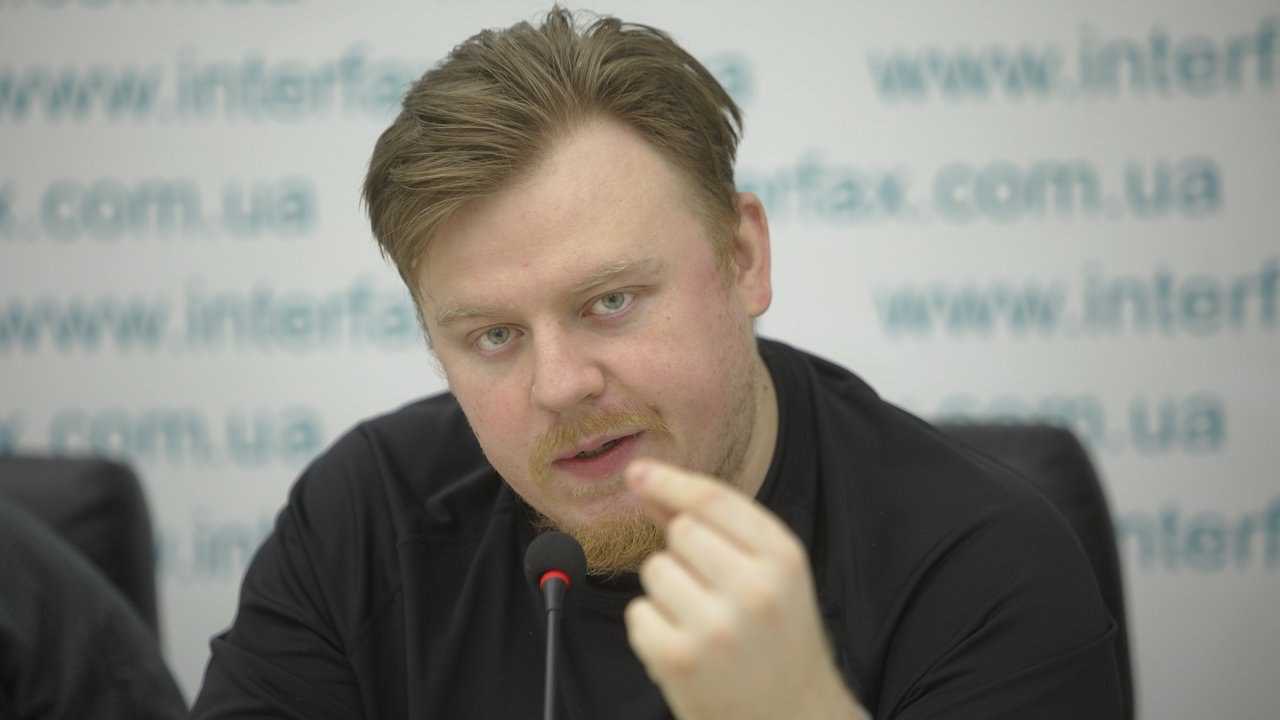
A constant stream of scandals and conflicts in the media acts as chronic stress.
“Today, most Ukrainians draw stress not so much from real life as from their own phones and news feeds. When the information space turns into an endless series of scandals and betrayals, people simply trigger a safety mechanism: they stop reacting to it. A person gets tired of the eternal chaos, “switches off” from the country’s life and closes themselves in their small world — home, work, store, — trying simply to survive on their own”, Bozhko explained.
In such a state, society gradually loses the ability for collective action and collective responsibility.
He compared this model to the principle of the “boiled carrot”—when changes occur so slowly that they are difficult to notice. As a result, people stop thinking in terms of the state or collective resistance, focusing only on personal problems. This is exactly what the enemy seeks, according to Bozhko—to blur social connections and weaken the sense of community.
Separately, Bozhko emphasized that combating such a strategy is not limited to refuting individual narratives.
“It is absolutely pointless to try to out-argue ideas or refute narratives if we do nothing about those who launch them — it’s like fighting the empty shells they shoot at us. People’s psyche is structured such that they will still watch scandalous bloggers or even outright thieves simply out of curiosity. Therefore, the problem is not that someone said something, but that these people have been systematically working for the enemy for years, and the state’s enforcement mechanism still cannot effectively stop their activities.”, he noted.
The state must shift focus from reactive response to information attacks to working with their perpetrators, particularly through changing legal approaches and expanding the capabilities of special services to act preemptively.
Media “Torpedoes” and the Struggle for Legitimacy
Political technologist Oleh Posternak focused on the role of individual media figures who are used as tools to undermine trust in state institutions. According to him, this is a very specific technology, where the key role is played not by the message itself, but by the image of its carrier.
Using the example of blogger Arti Green, Posternak explained how this scheme works. The image of a “truthful frontline soldier” automatically gives words additional weight and creates protection from criticism.
“Today, military uniform works as a magic key to public trust: if a politician must prove every word, a media military figure is believed instantly and without any questions. When such a person says they “were there and saw everything,” they automatically become a source of truth in the viewer’s eyes. The most dangerous thing is that this image of a frontline soldier is often used as a “moral shield” that blocks any criticism: try to contradict such a person, and you’ll immediately get a reproach—”did you fight yourself?””, Posternak noted.
As a result, any criticism of such statements is devalued, and widespread claims quickly take root in public consciousness.
Yurii Honcharenko drew attention to the fact that such information attacks have clear synchronization with political processes. According to him, waves of criticism and discreditation of new appointments in the security and defense sector—particularly Kyrylo Budanov and Mykhailo Fedorov—appear precisely at moments when important negotiations are underway or reforms are being announced.
“When we see massive media assaults against newly appointed officials, we must understand: the enemy doesn’t care about specific names. Its real goal — is to ensure that at the moment when these people sit down at the table for critically important negotiations or announce systemic changes, no one perceives their words as legitimate and authoritative. This is a strike not at the person, but at our ability to act and negotiate at the most difficult moments of the war, when the legitimacy of the negotiator determines the survival of the entire state”, he explained.
Posternak emphasized that in response to these challenges, the state must transition from reactive to systemic work. Among possible solutions, he named the idea of creating Information Forces of Ukraine—a structure that would work not with individual information incidents, but with protecting the cognitive space at a strategic level.
“Today, we need to stop perceiving information policy only as the work of press services and reach the level of genuine Information Forces of Ukraine. This is a matter of principle: the enemy has been engaged in this project for a very long time and, unfortunately, successfully, so we have no right to delay. We need real, professional specialists who will work on the country’s defense as professionally as drone operators do. At one time, we made the right decision by creating the Unmanned Systems Forces, and now we must take an analogous step — create a structure that will protect our information front and not allow the enemy to undermine the state from within”
This concerns long-term counteraction to influence technologies, not point-by-point refutation of individual attacks.
The roundtable demonstrated that in 2026, the information front remains one of the most vulnerable areas—primarily due to pressure on infrastructure and general societal fatigue. The main challenge for Ukraine lies in transitioning from constantly reacting to individual information incidents on social networks to a systemic and premeditated policy. This concerns the role of the state as an active player capable of clearing the information field and restricting the activities of those who consciously work to undermine trust and internal destabilization.
As the discussion participants emphasized, Ukraine’s resilience directly depends on the ability to preserve internal unity and prevent a situation where real problems—energy, social, or governance-related—become tools for destroying statehood. Historical experience shows that internal division combined with external pressure can have critical consequences, and the country must avoid this scenario.