The issue of mobilization cannot be reduced solely to an administrative or military problem: it is also part of the cognitive confrontation with Russia. Media expert Oleksii Kovzhun expressed this view during a panel discussion titled “Staying Strong: Possible Responses by Ukrainian Society to Russia’s Cognitive Pressure.” The event took place on October 9, 2026, …
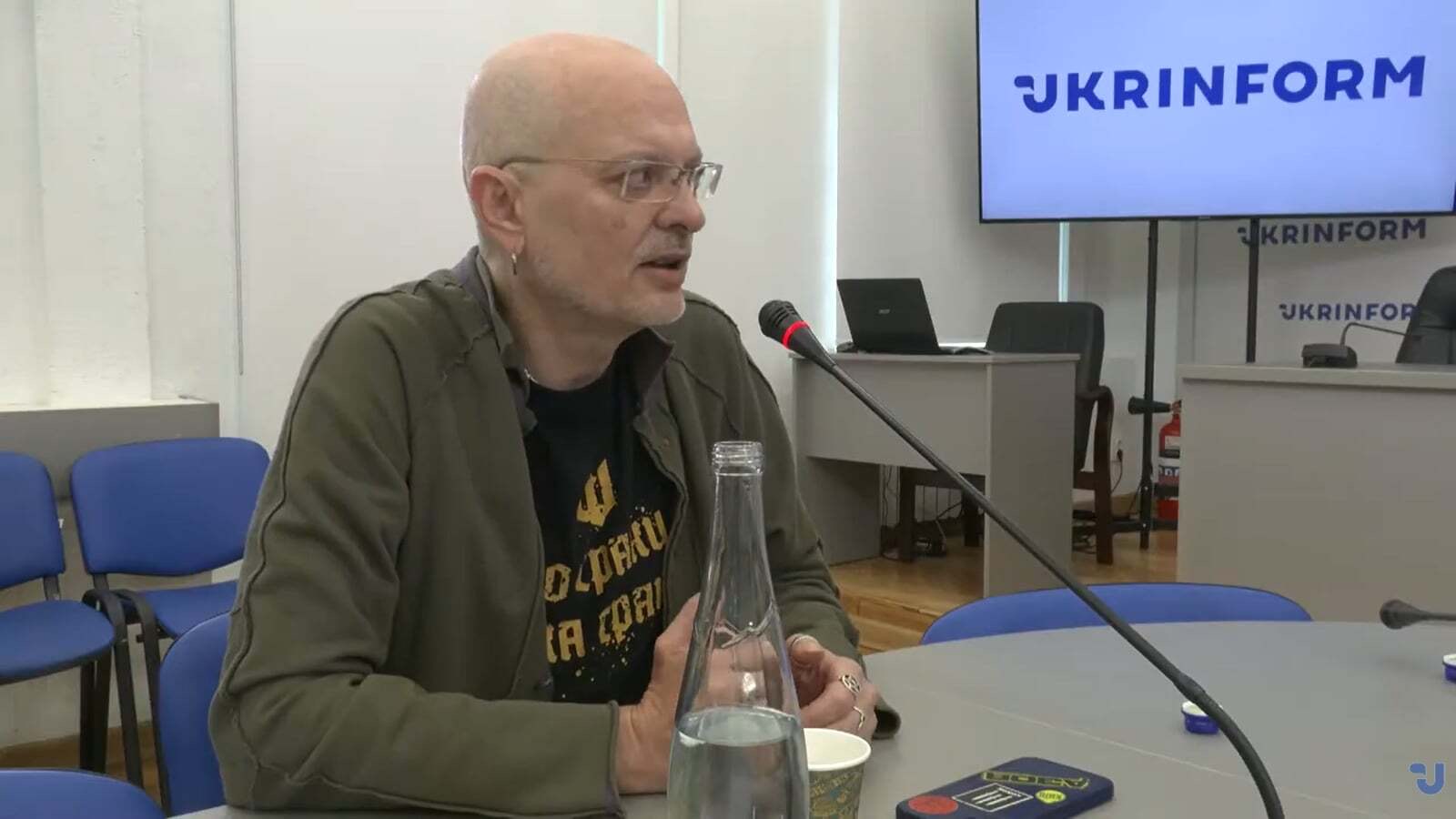
The issue of mobilization cannot be reduced solely to an administrative or military problem: it is also part of the cognitive confrontation with Russia. Media expert Oleksii Kovzhun expressed this view during a panel discussion titled “Staying Strong: Possible Responses by Ukrainian Society to Russia’s Cognitive Pressure.”
The event took place on October 9, 2026, at the Ukrinform News Agency in Kyiv. It was organized by the NGO “Foundation for Democracy Assistance,” the Ukrainian Security Club, and the InfoLight.UA Research and Analysis Group, with support from the Hanns Seidel Foundation in Ukraine. Participants discussed the information challenges facing Ukrainian society and ways to maintain its resilience in the face of Russian influence.
A subculture that was not addressed in a timely manner
According to Kovzhun, a distinct subculture has emerged in Ukraine consisting of people who avoid participating in the country’s defense. It has its own vocabulary, symbols, and recognizable markers, and society and institutions have been too slow to respond to it.
“The mobilization issue is a case in point, because here we let the Russians score a lot of goals. We are faced with a well-established, vibrant, dynamic, and welcoming subculture of draft dodgers with their own T-shirts and their own vocabulary,” he noted.
According to the expert, members of this group can be identified not only by their language but also by their clothing and the patches or stickers on their cars. The emergence of such signs indicates that this is a distinct social phenomenon that required a much swifter response from the government and civil society.
From Paternalism to Personal Responsibility
Kovzhun emphasized the importance of moving away from social paternalism. In his view, Ukrainians should shift from expecting the state to solve everything to actively participating in communal affairs.
He used homeowners’ associations as a metaphor for this approach: if residents do not participate in managing their building and hope that someone else will solve the problems, the community loses its ability to organize itself. Similarly, he said, this applies at the national level as well.
As an example, the expert cited a discussion in one of the building’s chat groups, where residents were trying to figure out where TCC representatives were located. Some of the participants immediately began accusing one another of being unpatriotic. According to Kovzhun, this highlights a deeper problem: citizens may have different understandings of their responsibility for a shared future.
Not just reacting, but also setting the agenda
The expert also cautioned against knee-jerk reactions by society and the media, where the news agenda is determined primarily by responses to external manipulation. In such cases, Russia gains the opportunity to exploit existing divisions.
“Ukrainian society must learn not only to respond to information attacks, but also to set its own agenda and define the boundaries of what is acceptable,” Kovzhun emphasized.