How can Ukraine wage war without losing its democracy? This question was answered at the International Forum "CarpathianSea Democracy Week2026" in Truskavets. Namely, at the panel discussion "Defensive Democracy: Security, Democracy and Recovery as a Single System" (moderated by Valerii Maydaniuk, PhD in Political Science, expert at the NGO "Foundation for Democracy Assistance"). The panel …
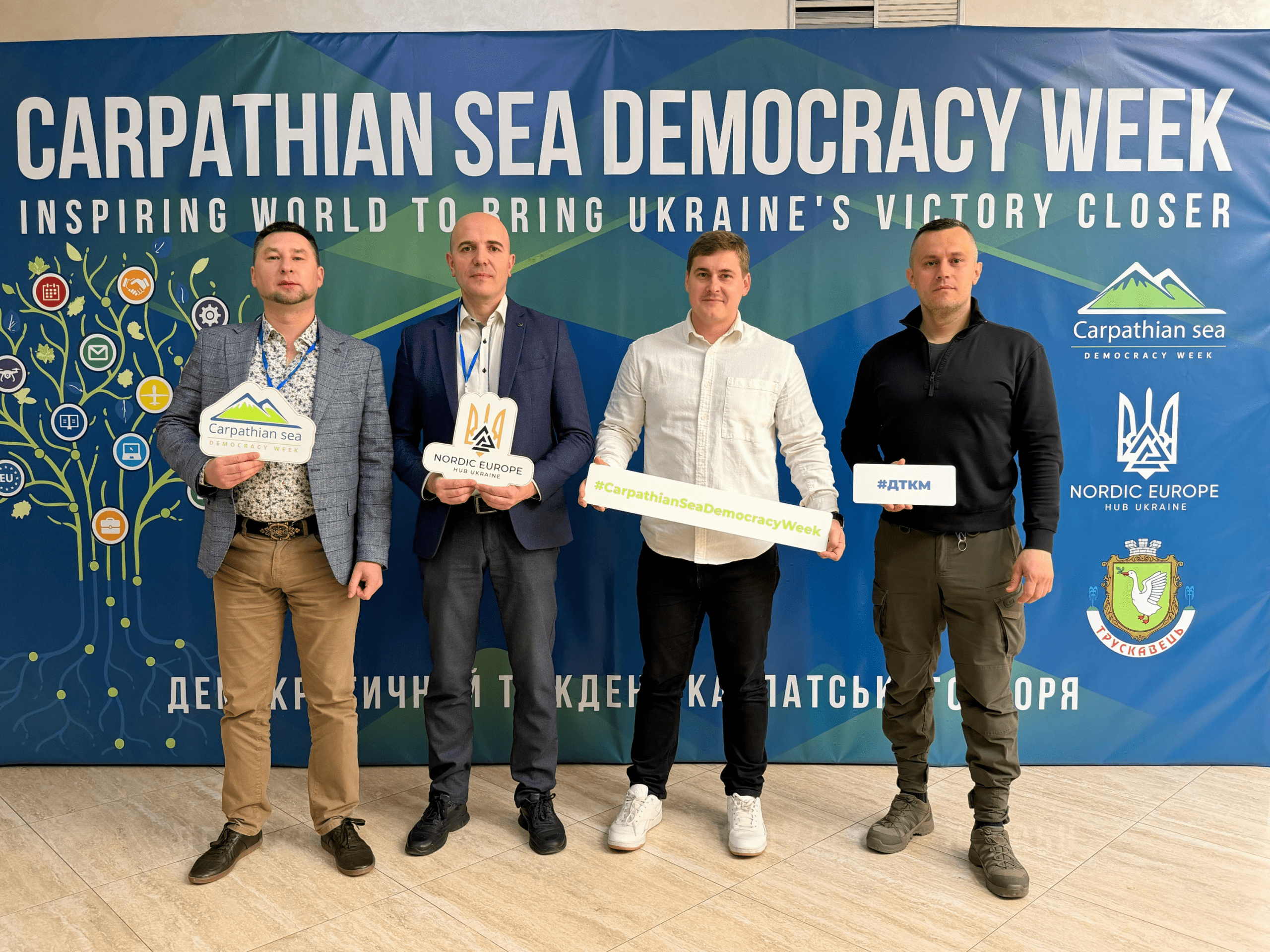
How can Ukraine wage war without losing its democracy? This question was answered at the International Forum “CarpathianSea Democracy Week2026” in Truskavets. Namely, at the panel discussion “Defensive Democracy: Security, Democracy and Recovery as a Single System” (moderated by Valerii Maydaniuk, PhD in Political Science, expert at the NGO “Foundation for Democracy Assistance”).
The panel brought together military officers, academics, politicians, veterans, and civic leaders from across Ukraine to discuss the concept of defense democracy, a systemic framework that links defense, democratic governance, and reconstruction.
Participants considered practical mechanisms for bridging social gaps, civil-military partnerships, legal protection of veterans, and the role of communities in building national resilience.
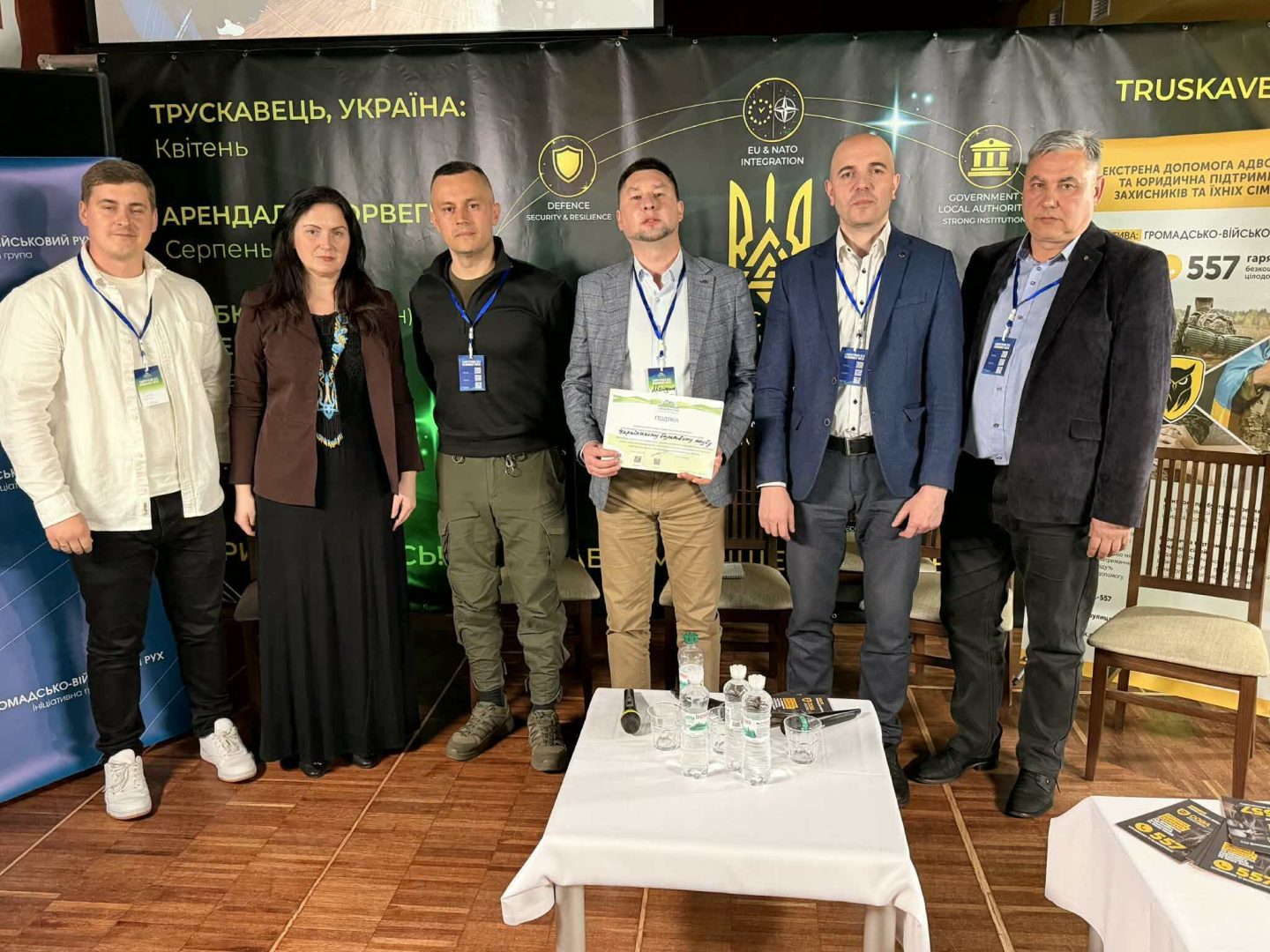
Professionals who make daily decisions at the intersection of security, government, and civic action made in-depth reports and proposals:
– Artem Vivdych, serviceman, executive director of the Odesa Strategy Union and expert on strategic planning for the restoration and development of territories in the areas of security and resilience (Odesa)
– Mykola Buchyn, Doctor of Political Science, Professor at Lviv Polytechnic National University.
– Serhiy Shmyhol, entrepreneur, deputy of Cherkasy City Council, public figure (Cherkasy)
– Oleksii Ivashyn, coordinator of the initiative group for the creation of the Civil-Military Movement, participant in the Russian-Ukrainian war (Kyiv)
– Oleh Ilkiv, coordinator of the SOVA project (emergency legal aid for veterans, active military personnel and their families) in Lviv region, veteran of the Russian-Ukrainian war (Lviv)
Together with diplomats, experts, business and opinion leaders, representatives of the NGO “Foundation for Democracy Assistance” joined an open dialogue on challenges and solutions for the country.
“A democracy that is unable to protect itself turns into a fiction, and civil liberties become declarative imitations. Instead, security for democracy is the foundation of both civil rights and economic well-being and prosperity,” said political scientist Valerii Maidaniuk, moderator of the discussion.
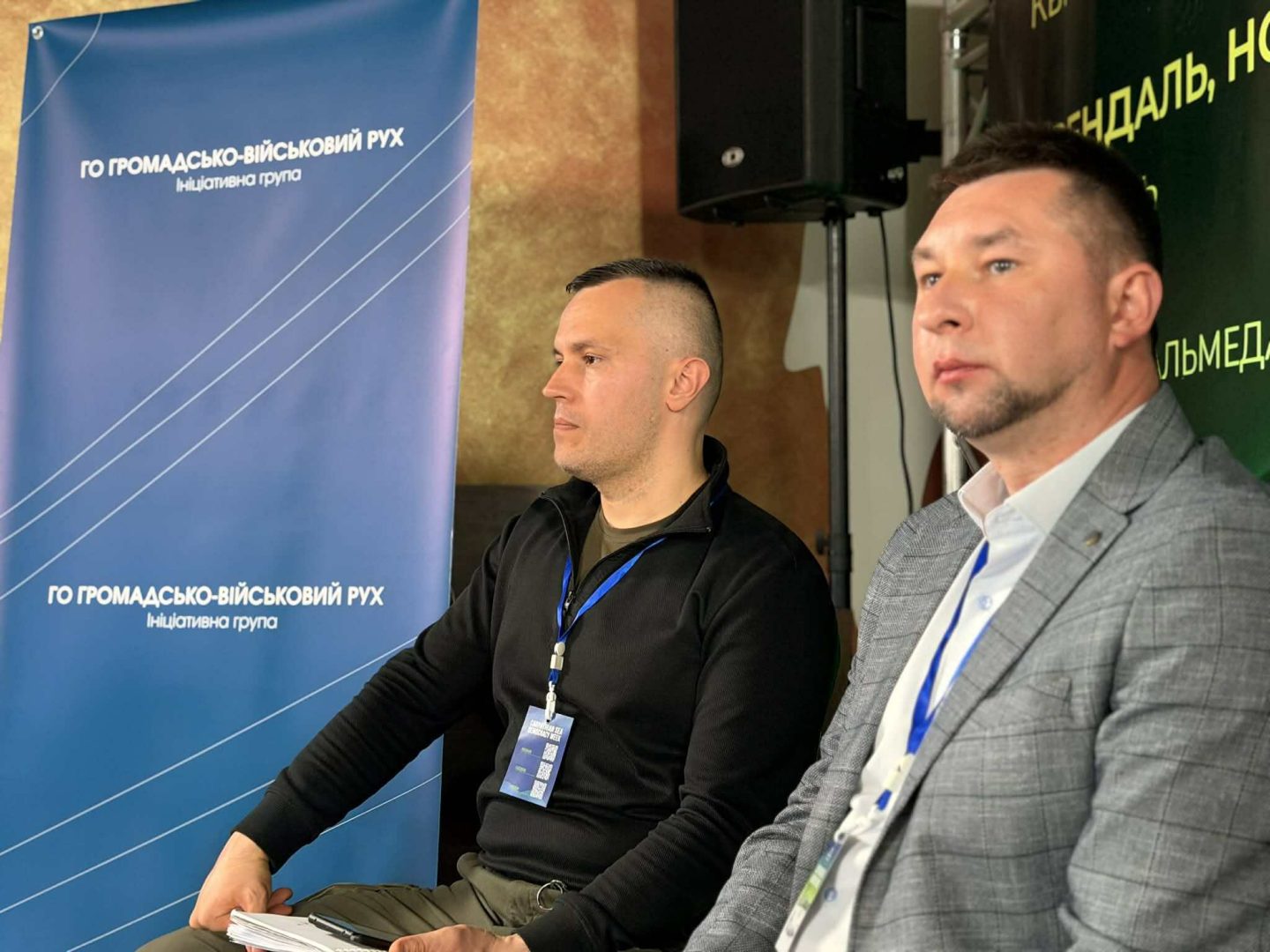
Doctor of Political Science Mykola Buchyn emphasized the problems of legitimacy of power without elections during the war and gave examples of when and how democracies successfully survived a full-scale war. “The effective functioning of a modern state is the result of an optimal balance between democracy and security. Democracy is an important value and an important ideal that we should strive to achieve. However, neglecting security, which is an important tool for protecting democracy in the face of modern security threats, can lead not only to the destruction of democracy but also to the loss of statehood,” emphasized Buchyn.
Oleksii Ivashyn spoke about the civil-military movement as a subject of democracy and emphasized that “the issue of unity of Ukrainians is a matter of survival of the state. Unity in resistance can be achieved only through the introduction of the principles of defensive democracy, when the burden of war is evenly distributed among different social strata,” said Ivashyn.
Cherkasy City Council member and public figure Serhiy Shmygol emphasized the problems of local government during a full-scale war: “The community is the first line of defense of democracy. The war has tested decentralization to the limit and it has become clear that it is a bulletproof vest for state values. Our Freedom begins at home, where local government serves as the foundation of resistance.”
Artem Vivdych, a soldier who took part in the online panel discussion, emphasized the problems of recovery in the face of systemic destruction: “Recovery cannot wait for the end of the war: communities need development strategies right now, in the midst of active hostilities. But any recovery plan without a security analysis is a document that can be destroyed by a single missile. Defensive democracy offers a framework for such integration: not militarization of communities, but conscious resilience. A community is not just an administrative unit, but a basic element of national resilience.”
The issue of assistance and adaptation of veterans was particularly acute. “A strong state begins where everyone understands their role in protecting the country and knows that their rights do not remain only on paper. Democracy in wartime is based on trust and responsibility on the part of both the state and society. It is this balance that gives us resilience,” says Oleh Ilkiv, coordinator of the SOVA project.
The key message of the Defense Democracy panel was that security, democracy and recovery are a single system, where each element defines and complements the other. And the basis of Ukraine’s future is a balance between security and democratic values and principles that have always defined the mentality of the Ukrainian nation.