On July 14, a roundtable discussion "Why Poland is turning from a lawyer for Europe into a prosecutor" was held in Kyiv at the Museum of the Sixties. The event was organized by the Intermarium Information Center and the Foundation for Support of Democratic Initiatives with the support of the United Union of Patriots of …
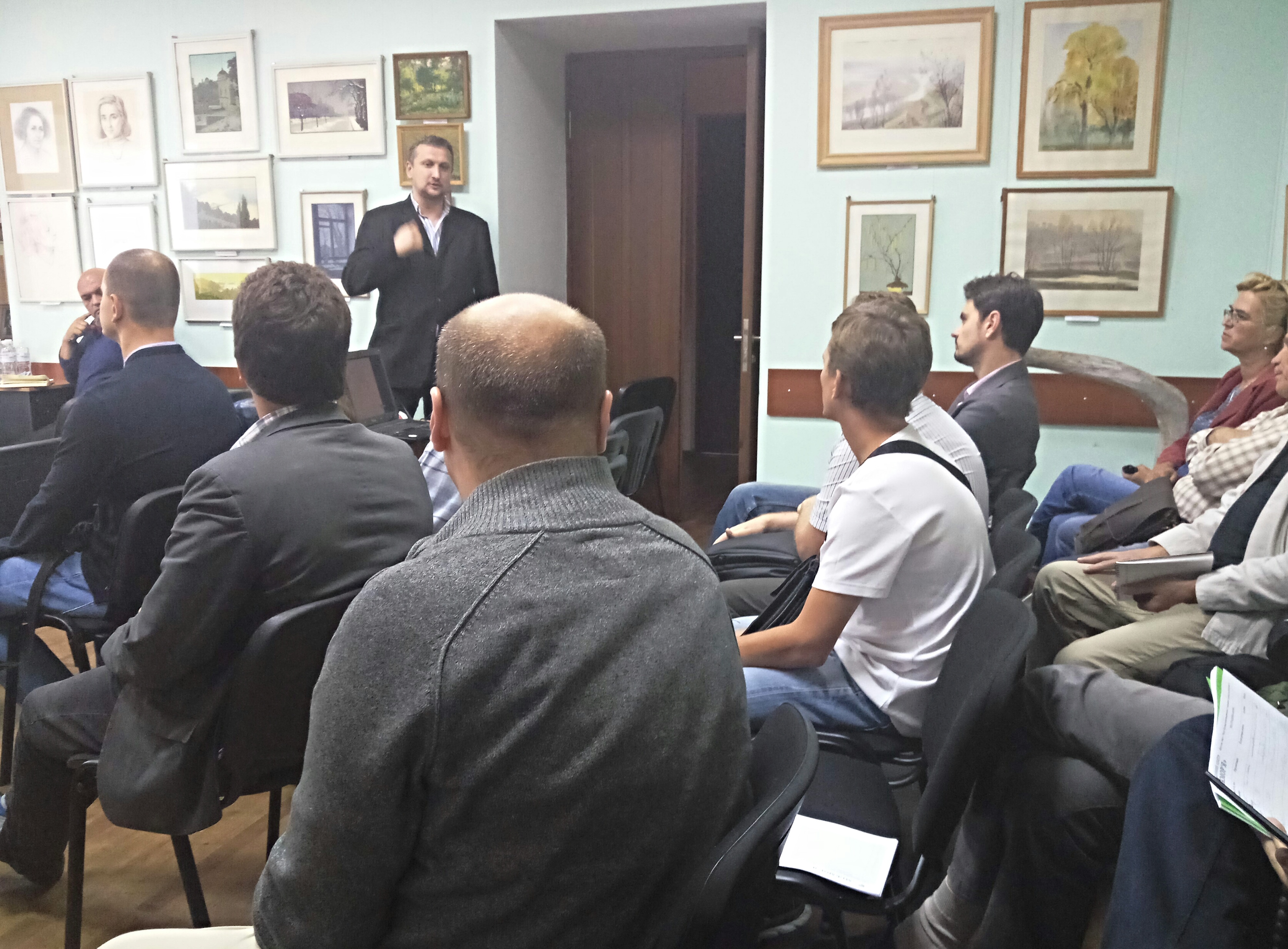
 On July 14, a roundtable discussion “Why Poland is turning from a lawyer for Europe into a prosecutor” was held in Kyiv at the Museum of the Sixties. The event was organized by the Intermarium Information Center and the Foundation for Support of Democratic Initiatives with the support of the United Union of Patriots of Ukraine.
The event discussed current issues of interstate Ukrainian-Polish relations in the context of recent statements by Polish Foreign Minister Witold Waszczykowski on the impossibility of Ukraine’s European integration into the European Union without resolving historical issues and the rights of the Polish minority.
According to the experts of the Intermarium Center, today Ukraine and Poland are implementing a Russian scenario aimed at building a conflict of identities and interests, primarily in the field of national memory. The “third party” is constantly looking for new topics of conflict, trying to “feel” live conflictogenic contradictions between the two nations.
According to Yuriy Mindyuk, an expert at the Intermarium Information Center, the Ukrainian presence in Poland is very weak and inadequately represented, especially given the circumstances. On the other hand, today there is an urgent need to intensify Ukraine’s position in Poland, to increase its presence in the diplomatic, political, informational, cultural, and public spheres. This area should be given a very serious priority, organizational, media and resource support.
The roundtable participants suggested paying attention to the system of mutual protection of the rights of “related minorities.”
 The main emphasis was placed on the fact that since 2015, Ukraine has been implementing a decentralization reform that provides for the formation of self-sufficient territorial communities, including on the basis of ethnicity. The creation of Mostyska, Dovbyshivska, and, say, Polonska Polish communities in Ukraine would be the key to a new attempt at understanding, provided that the Polish side abandons post-imperial chauvinism, further accusations of historical crimes against Ukrainians, and similar national and territorial protection of Ukrainians in Poland. Such a plan is beneficial to both sides, but in terms of minorities and communities, it is more beneficial to the Polish side, as it preserves and partially revives Polonia in Ukraine. This initiative does not in any way threaten the territorial integrity of Ukraine.
According to the experts who took part in the discussion, the Ukrainian side should also provide asymmetric responses to counter Kremlin scenarios. First of all, we are talking about implementing joint synergistic programs for the two countries, primarily in the information, economic, cultural, and public spheres. It is necessary to start opposing the activities of a circle of people who work against the understanding of the Polish and Ukrainian peoples – politicians, public figures, media activists, etc. The next step is to establish closer cooperation with the unofficial circle of “friends of Ukraine” in Poland in all areas – from political to business, cultural, etc. Ukraine and Poland need to adhere to the clear view that the difficult pages of history should be studied by scholars, and this should be the domain of academia, not the media, public mythology, or international relations. The Polish side should receive a clear signal that unfriendly statements by officials will be taken very seriously and with respect.
The participants of the event once again emphasized the need to reach a consensus among Ukrainian systemic nationalist and patriotic organizations on the impossibility of direct symmetrical responses to provocations from the Polish side, including the destruction of graves or memorials, attacks on premises or representatives of the Polish national minority.
The roundtable was attended by:
– Yevhen Karas, coordinator of the Sich movement;
– Dariusz Materniak, editor-in-chief of the PolUkr portal, director of the Poland-Ukraine Center for Analysis (Warsaw);
– Yevhen Bilonozhko, editor-in-chief of the PoloNews portal;
– Oleksiy Kurinnyi, Board Member of the Foundation for Support of Democratic Initiatives;
– Yuriy Mindyuk, expert of the Intermarium Information Center;
– Kostyantyn Kanishev, expert of the Laboratory of Political Strategies and Analysis, and others.
As a reminder, the Intermarium Information Center was established in April 2017 to inform the general public about the idea of the Intermarium – a geopolitical union of the Baltic-Black Sea countries, primarily Ukraine, Poland, the Baltic States, and potentially Belarus, Moldova, Georgia, Romania, and others. In the situation of security, economic, and political challenges from Russia, these countries can at least carry out in-depth coordination of actions, and at best, conduct joint defense, economic, and political activities to protect their sovereignty.