Y. Goncharenko - expert of the Intermarium Information Center, public and media activist, blogger Extended text of the report for the round table "The Baltic-Black Sea Union - from myth to reality", which took place on June 08, 2017 in the club "Our Format". Published under a Creative Commons Attribution License, version 4.0 International . …


Y. Goncharenko – expert of the Intermarium Information Center, public and media activist, blogger
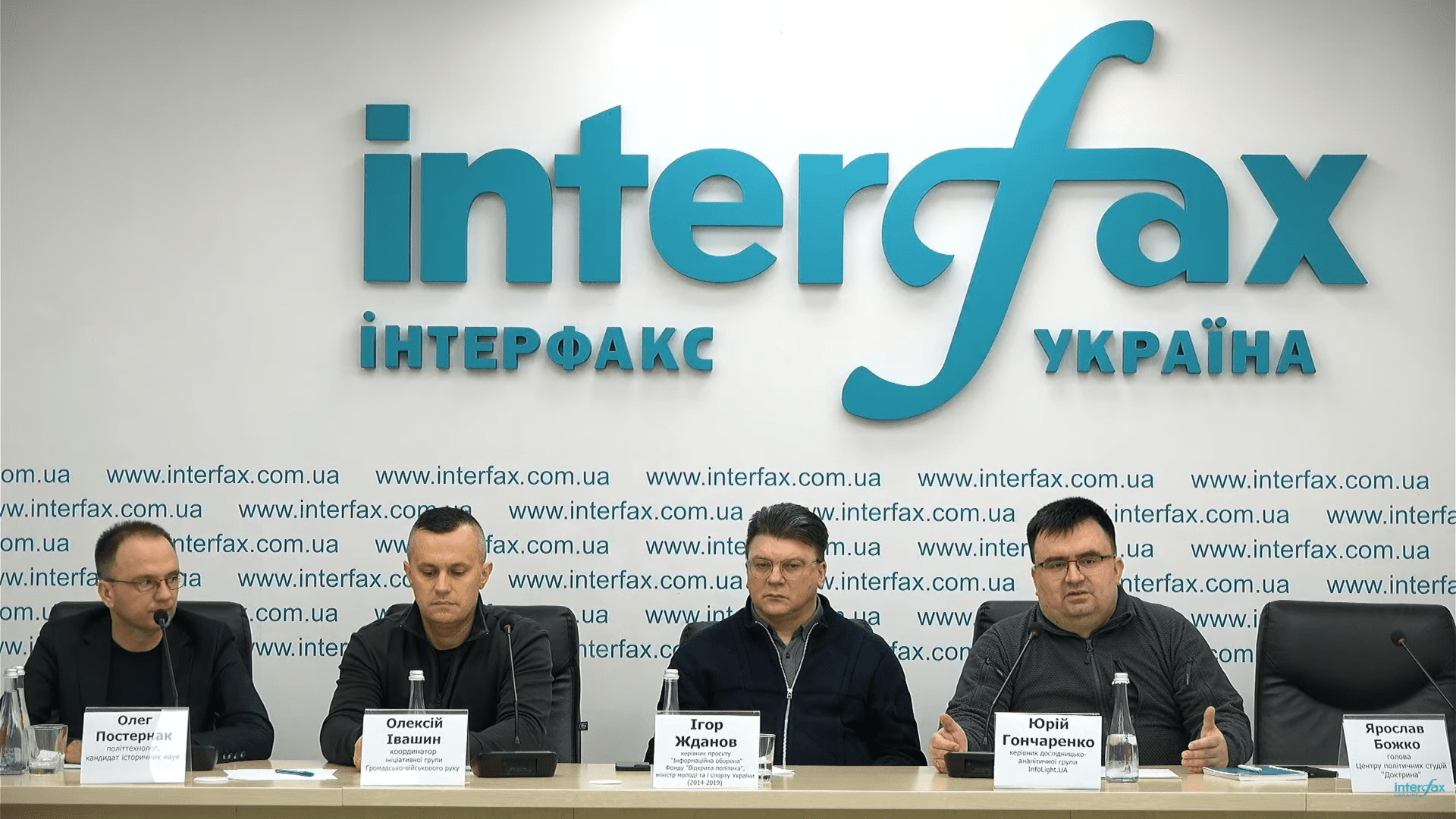
Extended text of the report for the round table “The Baltic-Black Sea Union – from myth to reality”, which took place on June 08, 2017 in the club “Our Format“. Published under a Creative Commons Attribution License, version 4.0 International .
The round table was organized by Information Center “Intermarium”, with the assistance of OF THE NGO EWCU.
“… Ukraine’s independent existence (especially within its current borders) can only make sense as a “sanitary border”… All this condemns Ukraine to a puppet existence and geopolitical service to the thalassocratic strategy in Europe. In this sense, Ukraine’s role is similar to that of the Baltic republics. On this basis, the project of creating a “Black Sea-Baltic Federation,” i.e., a typical “sanitary border,” a subversive geopolitical entity that would serve to provoke instability in Eastern Europe and prepare the preconditions for a series of armed conflicts, was seriously discussed at one time. The existence of Ukraine within its current borders and with its current status as a “sovereign state” is tantamount to a terrible blow to Russia’s geopolitical security, tantamount to an invasion of its territory.”
Alexander Dugin, “Fundamentals of Geopolitics”
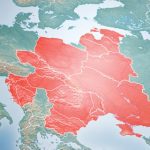
With the beginning of Russian aggression against Ukraine in 2014, as well as against the backdrop of the processes that have begun to take place in the European Union (Brexit, the growing popularity and possibility of disintegration forces coming to power) and the possible collapse or reformatting of both the EU and NATO, it is even more important to find opportunities for the practical implementation of the “Intermarium” concept – the creation of a powerful Baltic-Black Sea Union of Central and Eastern European countries (Ukraine, Poland, Lithuania, Latvia, Estonia, and others).
The implementation of this project will have serious geopolitical, economic, cultural and, most importantly, security benefits. Under the current circumstances, when Russia has begun to implement its aggressive geopolitical powers, which are dangerous for all European countries, the actual creation of the Baltic-Black Sea Union will be beneficial both to the direct participants of this formation and to the countries of the so-called “Old Europe”, which will receive a real deterrent to Russia’s advance to the west.
- From historical examples to today’s realities
Today, the Russian Federation is concentrating all its efforts on keeping Ukraine in its fold, at the very least, and at the same time achieving dominance in Central and Eastern Europe. Zbigniew Brzezinski also noted that a Russia without Ukraine cannot become an empire. Accordingly, the international community should make every effort to prevent Russia from achieving its neo-imperial goals. Some contemporary politicians realize this.
For example, Polish President Andrzej Duda can be seen as an active supporter of the “Intermarium ” concept, who, in particular, said: “I believe that we will be able to realize the great idea of the Intermarium”
It can also be recalled that an active supporter of these ideas was former Polish President Lech Kaczynski, who in 2008 advocated the creation of a coalition of regional countries to support Georgia through military aggression by Russia. Today, another former Polish president, Lech Walesa, also supports this idea.
Former Lithuanian President Vytautas Landsbergis also believes that the practical implementation of the Intermarium idea is currently relevant: “The revanchism of the former Russian Empire is invincible. It is like a disease, and we must think about how to help Russia survive and get rid of it.”
The idea of creating a union of countries located between the Baltic and Black Seas was first voiced in 1919 at a conference held in Latvia and attended by representatives of the governments of Poland, Ukraine, Lithuania, Latvia, Estonia, and Finland. At that time, certain formal steps were taken, including the signing of a declaration on the creation of a union on the basis of a confederation, but the matter did not go further due to certain misunderstandings.
The most famous and consistent supporter of the idea of the Baltic-Black Sea Union can be considered Józef Piłsudski, who actually introduced the concept of “Intermarium ” and the concept of “Prometheanism”. According to his plan, Poland was to become the center of integration processes that would bring together, on the one hand, all the “European” remnants of the Russian Empire, and on the other, all Slavic peoples, with the exception of Russians. In his time, between the two world wars, Poland was the largest country in the region, and therefore was considered a natural center of integration processes. Polish researchers of the time proposed the so-called “Jagiellonian concept” as one of the options for justifying the feasibility and naturalness of such an association. This concept was named after the Jagiellonian royal dynasty, which ascended the throne in 1386 and eventually united the Kingdom of Poland and the Grand Duchy of Lithuania under its leadership on a federal basis.
Pilsudski rightly believed that only such a federal union could protect the countries of Central and Eastern Europe from domination and absorption by Russia or Germany. His idea of Prometheanism was aimed at achieving the dismemberment of Russia through the support of national liberation movements. And the Intermarium project was to institutionalize the union of free peoples from the Baltic to the Black Sea and to become a continuation of the multinational and multicultural tradition of the Polish-Lithuanian Commonwealth.
However, the categorical rejection of this idea by the USSR, for obvious reasons, and the lack of support from the countries of “Old Europe” forced Piłsudski to make peace with the Bolsheviks and recognize the Ukrainian Soviet Socialist Republic instead of the Ukrainian People’s Republic. However, his own prediction that “without a free Ukraine there will be no free Poland” soon came true. After the Second World War, Poland, like all other Eastern European countries, came under Soviet occupation.
Even in these circumstances, some politicians, such as Polish General Władysław Sikorski, continued to support the concept of the Intermarium, now as a promising project for the future. The government-in-exile he headed had been negotiating with Greek, Yugoslav and Czechoslovakian counterparts during World War II to address the issue of postwar order.
In the 1960s, the so-called “Giedroyc-Mieroszewski line” became popular, in which politician and publicist Jerzy Giedroyc and political scientist Juliusz Meroszewski attempted to adapt the concept of the “Intermarium” to the realities of the time and set it forth in the ULB (Ukraine-Lithuania-Belarus) doctrine, published in the pages of the Polish emigrant magazine Kultura.
- Theoretical aspects and practical issues
In order to develop practical recommendations for the implementation of the idea of the Baltic-Black Sea Union, in the context of Ukraine’s needs and possible steps, it is necessary to consider the main foreign policy vectors for the Ukrainian state. These are:
- Eurasian (Russia and other CIS countries);
- Euro-Atlantic (Western Europe and the United States);
- Southeast (Balkans, Turkey, Middle East).
These directions should be considered as respective paradigms of foreign policy thinking, each of which has its own historical background and objective geopolitical factors. Historically, in each period of independence, when Ukraine had the opportunity to choose, it had to choose from these directions.
This can be explained according to classical geopolitical theory. As is well known, this theory considers two geopolitical spaces – telurocratic and thalassocratic. The first, which is the embodiment of the Eurasian model, is a type of civilization or a form of modern state, the entire economic, political and cultural life of which, due to its geographical location, is focused on land-related activities. The second, on the contrary, is an embodiment of the Euro-Atlantic model and a type of civilization or a form of modern state, the entire economic, political and cultural life of which, due to the lack of land resources or geographical location, is focused on activities related to the sea, maritime navigation and control of maritime spaces and coastal regions.
In between them, according to the theory, there are regions (or civilizations) that play a key role in the global balance of power and can be called a “country or civilization of the frontier.” Without criticizing or confirming this theory itself, it is worth noting that Ukraine, which is obviously one of these “countries or civilizations of the frontier,” has had both significant advantages and major problems in its history. Powerful global players have constantly fought for Ukrainian territories.
“Whoever rules Eastern Europe rules over Heartland. Whoever rules Hartland rules the World Island. He who rules the World Island rules the world,” said the classic geopolitical theorist Galford John Mackinder. In his opinion, Eastern Europe is the key to controlling the Heartland, which he included Russia and Central Asia. And control over Hartland, in his view, is control over the world. McKiernan’s theories were adopted by the ideologue of the so-called “Russian world” Alexander Dugin, who believes that Russia should take control of Eastern Europe, as independent states in it are a threat to Russia’s geopolitical existence. And at one time, this theory was also partially exploited by Nazi Germany, which saw itself in Hartland.
For a long time, Ukraine was under the control of the Russian Empire, which imposed European values of paternalism, autocracy, and ethatism on us, which greatly hindered our development. After gaining independence and to this day, a certain part of the Ukrainian population continues to support pro-Russian orientations. Since the beginning of the Russian aggression in Crimea and eastern Ukraine, tolerance towards Russia in Ukraine has significantly decreased, but still has not completely disappeared.
As a result of the Revolution of Dignity of 2013-2014 and subsequent events, Ukraine has unequivocally chosen the Euro-Atlantic vector of development, and the Eurasian vector has ceased to be relevant. Nevertheless, Ukraine’s chances of becoming a member of the European Union and/or NATO should be realistic. In order to acquire formal grounds for membership in these organizations, a number of measures need to be taken, including overcoming corruption, codifying domestic legislation in accordance with the requirements of the European Union, reforming the judicial system, modernizing key areas of economic and social life, etc. It is clear that all this cannot happen in one day.
On the other hand, the European Union has faced new challenges: territorial threats, migration problem, economic problems in some EU countries, which postpones the question of Ukraine’s accession to the European Union for an indefinite period. Under these circumstances, the issue of forming a powerful Baltic-Black Sea Union that will curb the Russian Federation’s imperial ambitions is becoming more urgent.
Today, the Baltic-Black Sea Union is a significant obstacle to Russia’s realization of its revanchist and expansionist concepts. In this context, friendly relations between the countries that have the potential to realize the idea of the “Intermarium”, in particular Lithuania, Poland, and Ukraine, pose a particular danger to Russia. This alliance would at least stop Russia’s expansion to the West.
Since most of the potential members of the entity are already members of the European Union, the practical implementation of the “Intermarium” concept in the form of the Baltic-Black Sea Union should be done in such a way that there are no conflicts between EU, NATO and BSEC membership at the initial stage. The best option is to persuade NATO to support the creation of the Baltic-Black Sea Union as its own “side project.” In this context, it seems appropriate to focus on the security and economic spheres.
- Format and resources for the future union
To find the optimal format of the future entity, it is necessary to take into account, first, that most of the potential members of the first wave are EU members, and second, to take into account the EU’s current European Neighborhood Policy program.
The EU is currently in the process of revising and adjusting this program, and it would be advisable to come up with clear proposals for European partners so that the new format of this program would take into account the creation of the Baltic-Black Sea Union as an organic part. The EU can also be seen as one of the potential “sponsors” or investors of the project, as the countries of the so-called “Old Europe” are interested in a stable and friendly entity on the EU’s eastern borders that can deter Russia’s aggressive actions.
A potential investor/sponsor could also be the People’s Republic of China, which has recently shown interest in investing in the potential BBSU member states, in particular, as such contacts between the governments of China and Poland have intensified. If the Baltic-Black Sea Union has something to offer Beijing, it is likely that the answer will be positive.
As for the specific format of the future Intermarium, several options can be considered. First of all, we can take into account the experience of creating the EU itself and follow the path of signing sectoral, sectoral or security agreements open to further signing.
As in the old days of the Grand Duchy of Lithuania, the modern Baltic-Black Sea Union should be based on the Warsaw-Vilnius-Kyiv triangle, which in principle corresponds to the existing intensity of cooperation, as well as cooperation in the security sector, with Poland and Lithuania actively and substantially assisting Ukraine in its war with Russia. It is also obvious that Latvia and Estonia are the most promising potential members of the organization, and to a lesser extent, due to the current political situation in these countries, Moldova and Georgia. It is possible that Slovakia, Romania, Sweden, and Finland will express a desire to join. To some extent, this alliance can be considered an an anti-Moscow security pactand, accordingly, it may be of interest to those countries that already have or are considering the possibility of problems in relations with Russia, including armed conflicts.
As for Belarus, its membership in this entity seems unlikely at the moment, although the unpredictability and aggressiveness of Moscow’s policy may force Alexander Lukashenko to seek protection, and the Baltic-Black Sea Union may just be such an umbrella. However, the membership of a regime like Belarus’ should be considered only situationally, and it cannot have equal rights with other democratic countries.
- Necessary steps for gradual realization
Practical steps in the gradual implementation of the project and their sequence should primarily meet the following criteria:
- The most pressing and urgent problems should be addressed;
- The result of these steps should be obtained as soon as possible.
This is dictated primarily by the fact that the commitment to the idea of the “Intermarium” among both the political class and the population of the potential member states is not dominant, and in some of them it may be a minority position. We should also expect active resistance from countries that are directly threatened by the creation of the Baltic-Black Sea Union, primarily from Russia. In particular, in the information sphere, Kremlin-controlled resources are already promoting the topic of NATO/EU confrontation – the “Intermarium”.
For Ukraine, the most pressing issue is the security one, due to the ongoing aggression by the Russian Federation. Since almost all potential members of the first wave of the Baltic-Black Sea Union, except Ukraine, are NATO members, we should not expect them to commit themselves to direct military intervention in the war with Russia. On the other hand, the threat of Russia launching a “hybrid war” on the territory of these states is becoming more and more real, especially for the Baltic states. Given this circumstance, Ukrainian diplomacy must convince the governments of potential allies across the “Intermarium” of the need for a security alliance.
The format of such a union, as well as other proposals for practical steps from the experts of the Intermarium Center for the creation of the Baltic-Black Sea Union through the implementation of certain projects, are in the next report, which can be read here.
- Russia will intensify its opposition to the creation of the Baltic-Black Sea Union
As mentioned above, in the information sphere, Kremlin-controlled resources are already promoting the topic of the NATO/EU-Mediterranean confrontation, launching the thesis that the creation of the Baltic-Black Sea Union contradicts the existence of NATO and is being done to destroy this security alliance.
We can also expect attempts to take the process of creation/promotion under control, or to discredit the idea of the “Intermarium” both among the ruling elites and among the population of the countries – potential participants. In particular, the first negative examples have emerged when absurd radical measures are being taken to “support” the creation of the Baltic-Black Sea Union, marginalizing the very idea of the union.
The main area of counteraction from Russia is Polish-Ukrainian relations. By making the Poland-Ukraine alliance impossible, Russia is actually making it impossible to create the Baltic-Black Sea Union. Accordingly, maintaining good relations between Poland and Ukraine is in the strategic interests of all countries in the region and Europe as a whole.
I discussed this topic in detail in my report for the previous roundtable: “Russia’s Strategy and Tactics to Aggravate Ukrainian-Polish Relations”, which can be read at this link.