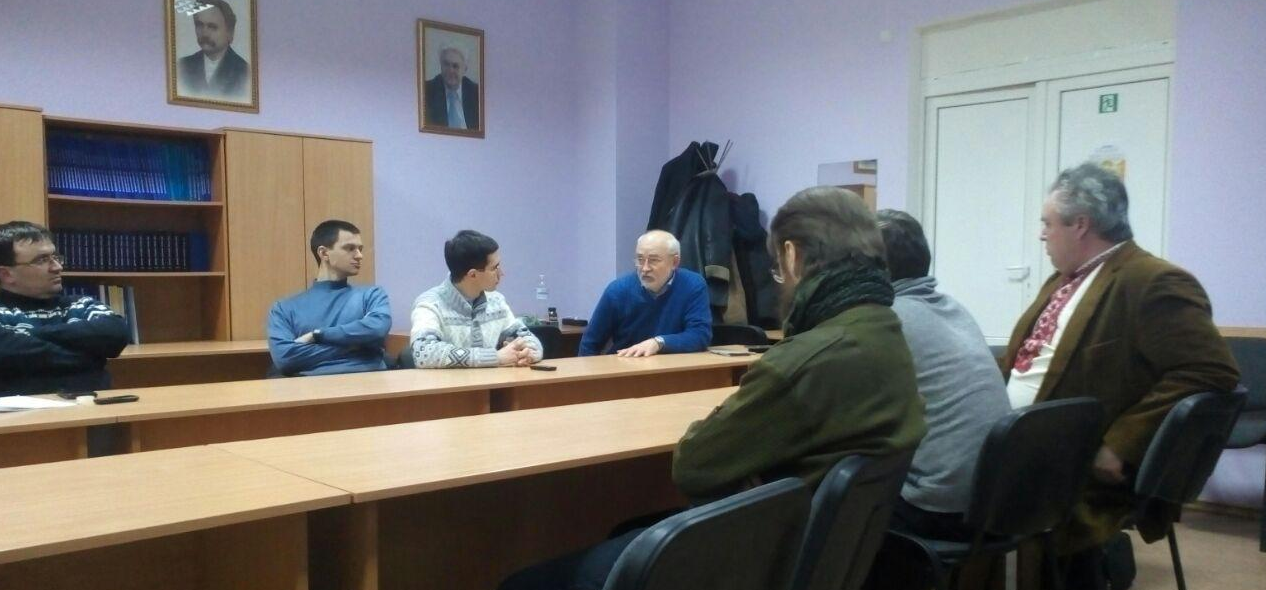
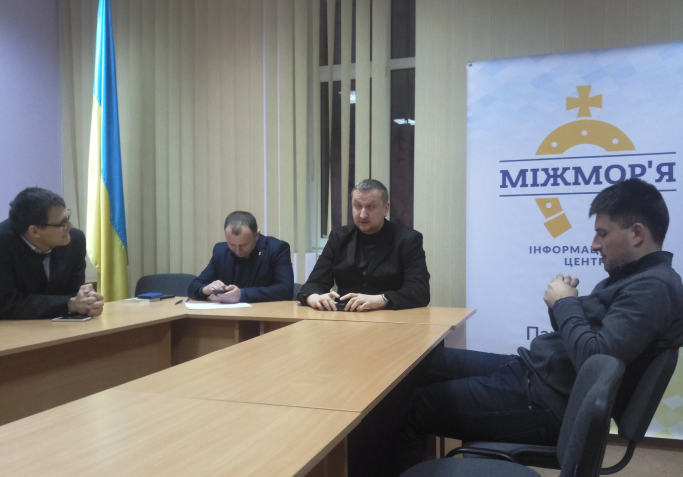
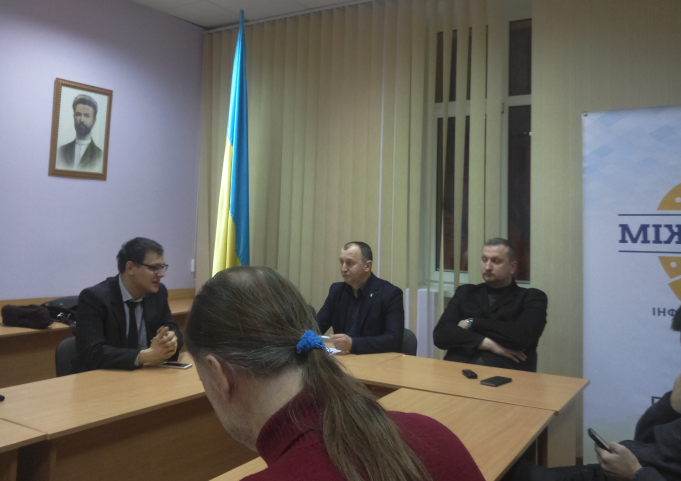
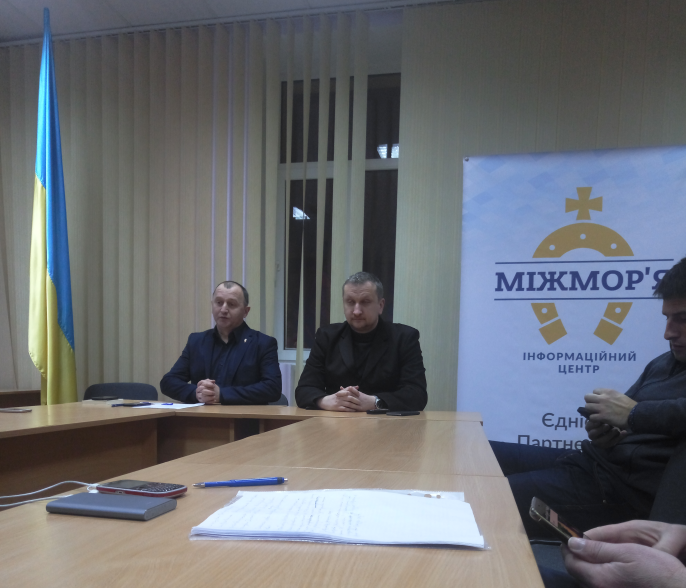
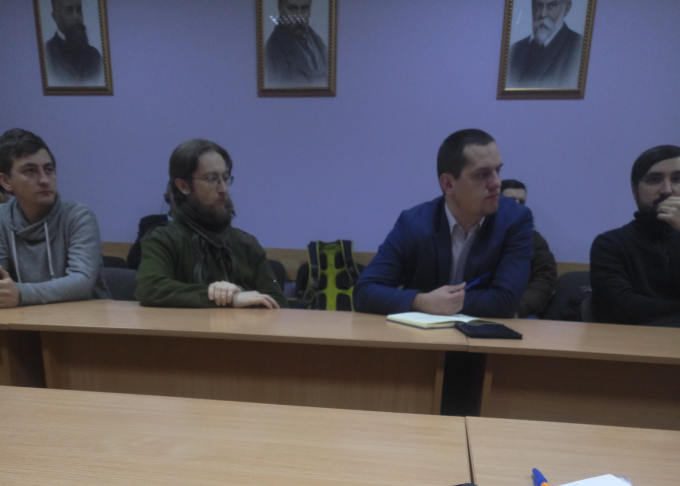
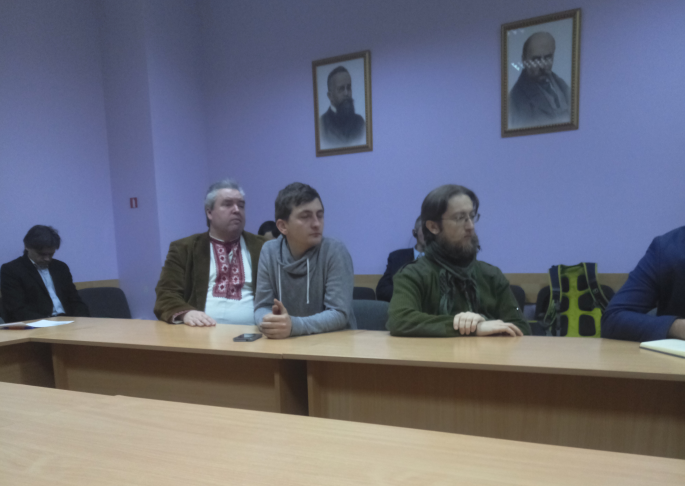
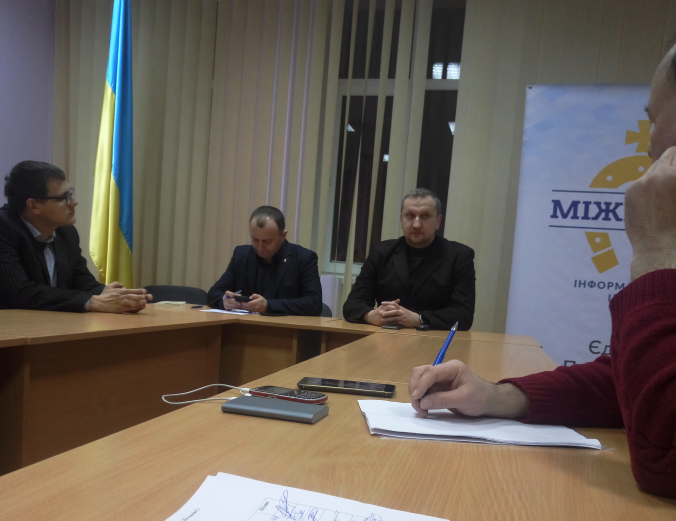
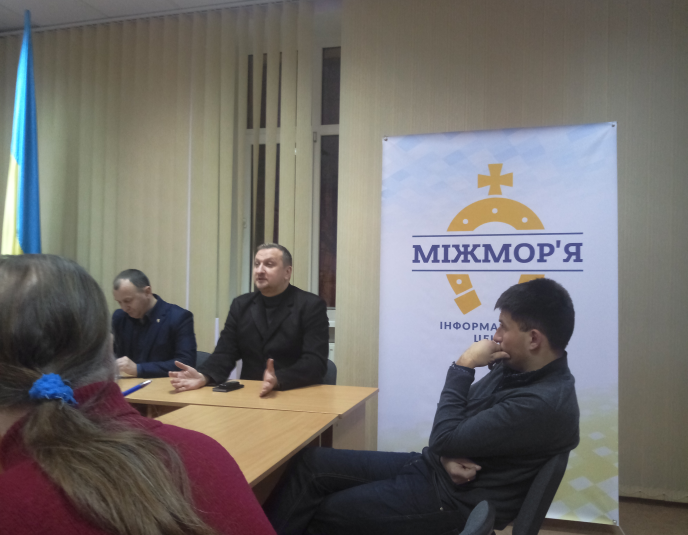
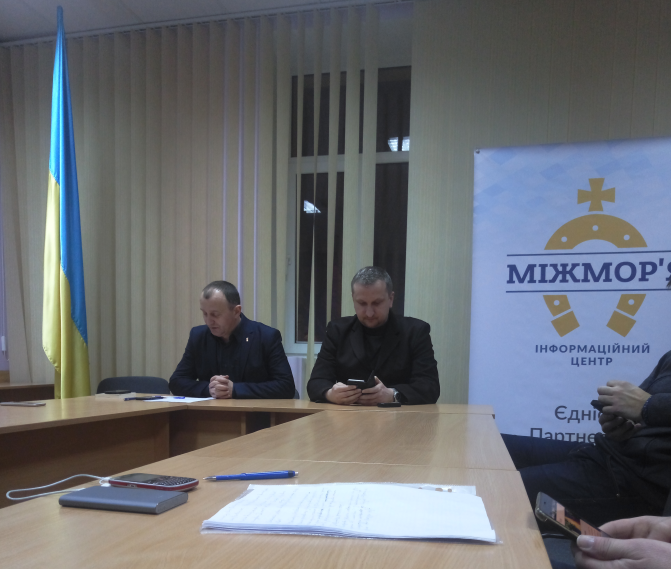
On February 27, 2018, at the premises and with the support of of the Research Institute of Ukrainian Studies a roundtable discussion "What should we do with Poland?" was organized by the Foundation for Support of Democratic Initiatives (within the framework of the Intermarium Information Center initiative) and Ukrainian Strategic Studies, a non-governmental analytical center. …

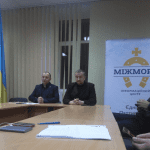
On February 27, 2018, at the premises and with the support of of the Research Institute of Ukrainian Studies a roundtable discussion “What should we do with Poland?” was organized by the Foundation for Support of Democratic Initiatives (within the framework of the Intermarium Information Center initiative) and Ukrainian Strategic Studies, a non-governmental analytical center.
Bohdan Halayko, Director of the Research Institute of Ukrainian Studies Bohdan Halayko, Director of the Research Institute of Ukrainian Studies.
After that, the speakers made their presentations:
- Yuriy Mindyuk, expert of the Information Center “Intermarium” and President of the Foundation for Support of Democratic Initiatives;
- Yuriy Syrotyuk, Director of the Ukrainian Studies for Strategic Studies, a non-governmental analytical center;
- Yuriy Rudnytsky, journalist.
Other participants also took part in the discussion:
- Yevhen Zherebetskyi, former Member of Parliament of Ukraine of the second convocation and former Deputy Chairman of the Ukrainian-Polish Forum;
- Georgiy Popov, journalist, volunteer of the Ukrainian Volunteer Army;
- Yuriy Oliynyk, expert at the at the Ukrainian Strategic Studies Center, a non-governmental analytical center;
and other participants of the event.
Following the discussion, it was decided to draw up a communiqué and create a working group to develop a document based on the proposals made during the discussion that would highlight the current state of Polish-Ukrainian interstate relations and propose a list of the most urgent actions required by Ukraine in the current situation.


The roundtable participants noted the escalation of threatening processes that have begun to have a significant impact on current Ukrainian-Polish relations. The “war of historical memory” that Poland has been waging against Ukraine for 2 years has not yet overshadowed other areas of cooperation, but poses a potential threat to them. The growing negative attitudes towards Ukrainians among the Polish population, anti-Ukrainian provocations, the unwillingness of the Polish authorities to restore destroyed Ukrainian graves in Poland and to grant legal status to Ukrainian necropolises, statements about the need to revise the concept of relations, in particular the rejection of the formula “Without a free Ukraine, there will be no free Poland” and the resolute unwillingness to apply the model of Christian reconciliation (“We forgive and ask you to forgive us”) in difficult historical issues make us think about the future of Polish-Ukrainian relations.
According to the participants, Poland has crossed several “red lines” in its behavior toward Ukraine, and further ignoring these actions by the Ukrainian side is unacceptable and unacceptable. The current situation requires the Ukrainian authorities and civil society to analyze various possible models of Poland’s behavior, including those that its leadership would try to implement in the event of a potential full-scale military aggression of the Russian Federation in Ukraine, and to develop a plan of measures that would prevent the hypothetical possibility of an attack on our western borders by the armed forces of our western neighbors.