The religious component of Russia's war against Ukraine in the two eastern regions of Ukraine plays a significant role not only in propaganda, but also in a certain policy of violence against various religious organizations. A significant number of cases of looting of church buildings, murder and torture of clergy occurred primarily in 2014-2015, but …
The religious component of Russia’s war against Ukraine in the two eastern regions of Ukraine plays a significant role not only in propaganda, but also in a certain policy of violence against various religious organizations. A significant number of cases of looting of church buildings, murder and torture of clergy occurred primarily in 2014-2015, but acts of persecution for religious beliefs continue.
As of the present moment, namely the end of June 2018, we have received disturbing information that the occupation administration, through the repressive and punitive body “MGB” of the “DPR”, conducted a search in the Al-Amal Muslim mosque in Donetsk. As a result of the search, religious literature and prayer books were seized, and the premises were sealed. The imam of the Al-Amal mosque, as well as Muslims who were in the mosque, were taken for questioning.
The self-proclaimed head of the “DPR” Alexander Zakharchenko stated that he recognizes only four denominations: “I am Orthodox, I go to church, I believe that the only church for a person who believes in God is the Moscow Patriarchate… I recognize 4 main denominations – Orthodoxy, Roman Catholicism, Muslimism and Judaism.” However, as we can see, the situation with religious freedoms does not resemble the peaceful coexistence of religious communities. The occupation administration favors one church, a branch of the Russian Orthodox Church in Ukraine, which calls itself the Ukrainian Orthodox Church (Moscow Patriarchate).
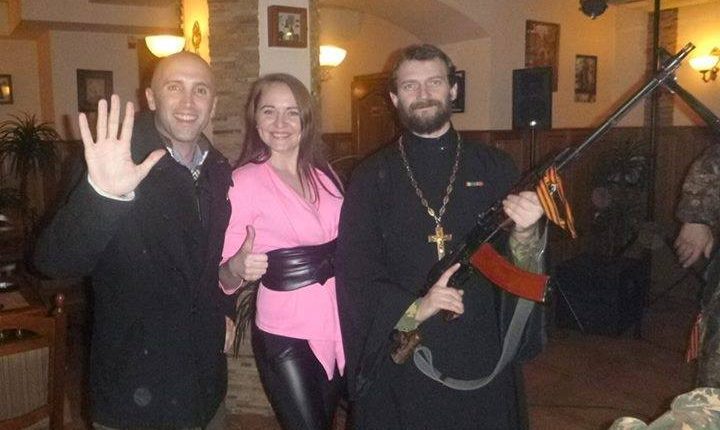
According to Stanislav Aseyev, a Ukrainian religious scholar and journalist who lived in occupied Donetsk and is currently in illegal detention, during the Easter service in Donetsk in 2016, representatives of the Moscow Patriarchate interrupted the service because the head of the occupation administration, Oleksandr Zakharchenko, appeared to demonstrate their loyalty to him.
In the “Constitution of the Donetsk People’s Republic”, which was proclaimed by the occupation administration on May 14, 2014, we see the following provision: “…the original and dominant faith is the Orthodox faith… professed by the Russian Orthodox Church (Moscow Patriarchate). The historical experience and role of the Russian Orthodox Church (Moscow Patriarchate) are recognized and respected, including as pillars of the Russian World.”
Almost from the very beginning of the activities of illegal collaborative military formations in the Donetsk and Luhansk regions, which carried out repressive, punitive and military actions, interference in the religious life of many communities was observed. Moreover, associations emerged that proclaimed themselves almost as military-religious entities designed to establish a single “correct” faith. Among them is the “Russian Orthodox Army”, an association that used the image of Christ the Savior as its official banner and carried out kidnappings, interrogations, torture and executions on the territory of the former regional office of the Security Service of Ukraine. In addition, there were battalion-sized units, which are branches of the Russian public organization Great Don Army, which also committed acts of violence, hiding their actions behind the desire to fight for the dominance of one religion.
The activities of these military associations were aimed at stopping the activities of most religious organizations in the region, with the exception of the Ukrainian Orthodox Church of the Moscow Patriarchate. The practice of unauthorized seizure of premises of religious communities, placement of military warehouses and garrisons on their territory, and the use of religious premises for other purposes than those intended has become a regular occurrence.
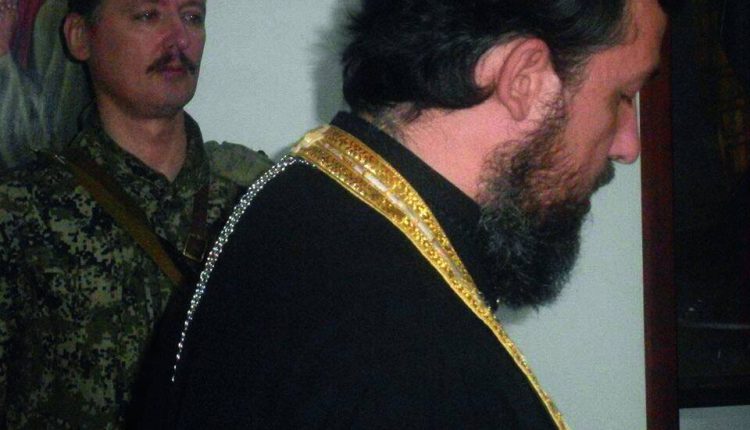
At the same time, local representatives of the Moscow Patriarchate cooperated with the occupation administration, supporting the propaganda of war and hatred during services, as well as interaction with subversive units that arrived from the territory of the Russian Federation to seize power in Donetsk and Luhansk regions.
The premises of one of the oldest monasteries of the Sviatohirsk Lavra of the Ukrainian Orthodox Church of the Moscow Patriarchate was the base for the saboteurs. Later, it was they who attacked Sloviansk and launched military operations against Ukraine. In addition, Villa Maria, a hotel complex that also belongs to the Ukrainian Orthodox Church of the Moscow Patriarchate in Sloviansk, was listed as the saboteurs’ residence.
There is a special mention of the repeated participation of priests of the Ukrainian Orthodox Church of the Moscow Patriarchate in various public events organized by the occupation administration, as well as the facts of direct participation in the persecution of Ukrainian citizens, including participation in violence. Two non-governmental organizations – the Center for Civil Liberties and the International Partnership for Human Rights – monitored persecution for religious views, collected evidence of illegal restriction of freedom, torture and other forms of discrimination in the occupied territories during 2014-2015. They collected numerous interviews with victims of such discrimination.
Below is an excerpt from an interview with a hostage from Donetsk who was held captive and illegally detained in seized government buildings: “The Orthodox priests came from Novosibirsk and got drunk together with the Butcher (a militant of an illegal military group). They came to preach their faith, because we are not canonical Orthodox, ‘wrong’. These priests put on Cossack hats and took up the steps, shouting that they were Cossacks. They told us that Orthodox people from the Novosibirsk parish had come to save the Russian people, to fight for the faith. They were really drunk, started waving their crosses and forced us to kneel for punishment. One of them hit Lekha (Oleksiy) several times with a cross until he bled and broke his cross.”
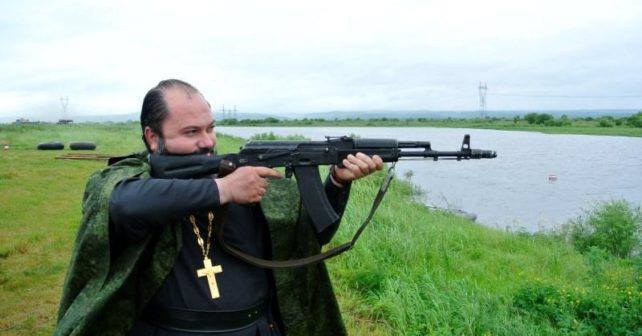
Not only representatives of the Ukrainian Orthodox Church of the Moscow Patriarchate, but also representatives of the Russian Orthodox Church, who came directly from the territory of the Russian Federation, took part in the persecution and punitive actions.
Back in March 2014, representatives of local churches created an association called the Donetsk Council of Churches. They include about 60 denominations of various denominations. The Ukrainian Orthodox Church of the Moscow Patriarchate also received an invitation to join this association. However, it ignored this invitation.
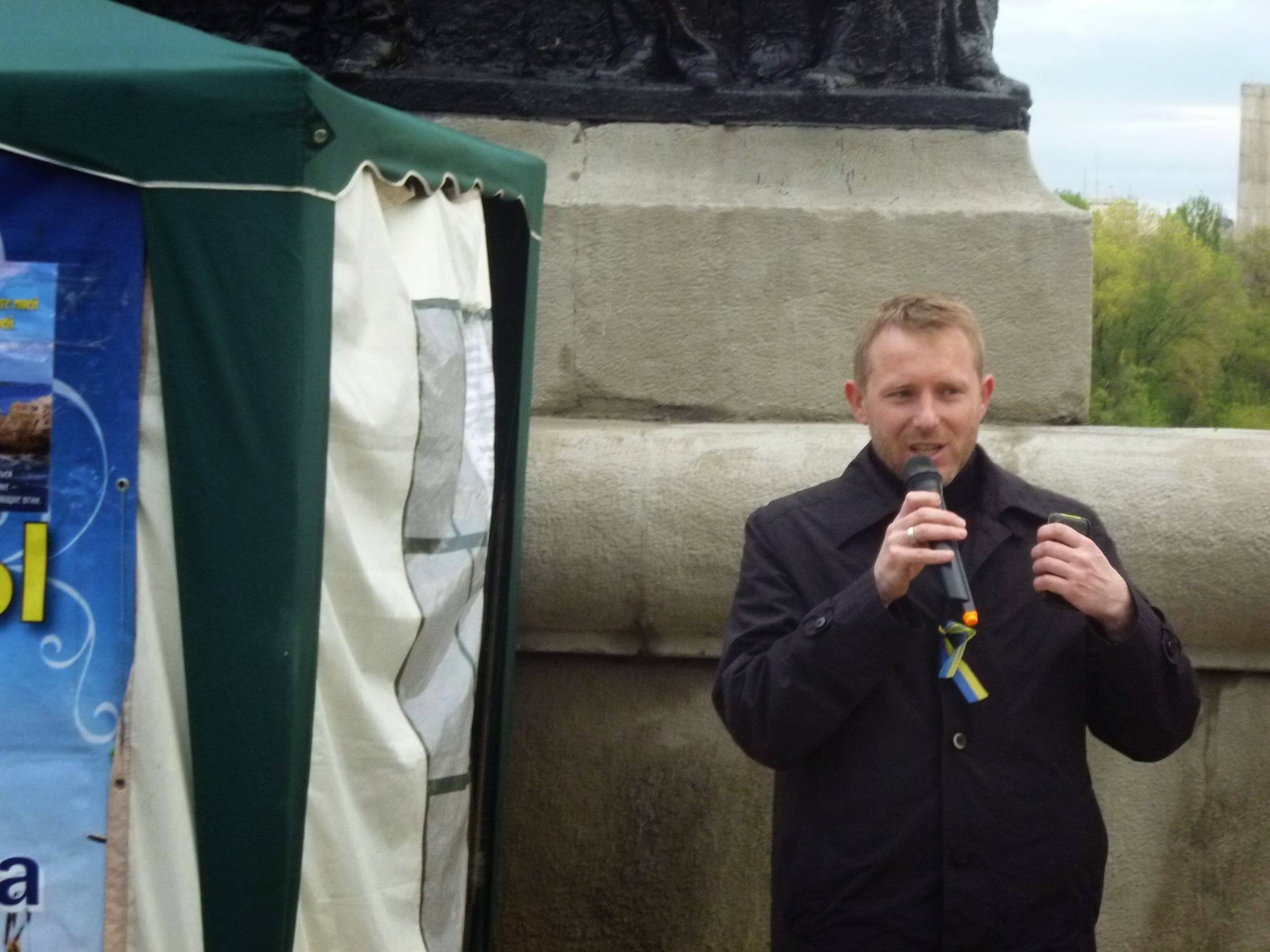
At the initiative of the Donetsk Council of Churches, an open-ended Prayer Marathon was launched on Constitution Square (Donetsk). It was an interfaith prayer initiative aimed at restoring peace and restoring the legal Ukrainian government and preserving the unity of Ukraine. This action began as an event that primarily gathered pastors and priests for joint prayer. However, in a very short time, believers of different denominations began to come to the event. A tent with the national flag of Ukraine was set up at the venue of the Prayer Marathon.
The repressive and punitive bodies of the occupation authorities took measures to stop the Prayer Marathon, repeatedly breaking the tent, and throwing things that were with the national flag of Ukraine into the Kalmius River. The attackers motivated their actions by the fact that they were fighting the actions of “schismatics,” “Satanists,” and “Uniates,” who have no place in the territory controlled by the occupation authorities.
On May 23, 2014, 25 armed men arrived at the venue of the Prayer Marathon in Donetsk, dismantled the tent at gunpoint and threatened to kill anyone who would come back to pray together. The pastor of the Assembly of God church, Serhiy Kosyak, appealed to the militants’ leadership to negotiate. In response, he was detained and subjected to physical violence. The local administration reported that the Prayer Marathon is possible only if there is no mention of Ukraine. Serhiy Kosyak’s memoirs about the events in Donetsk are to be published soon.
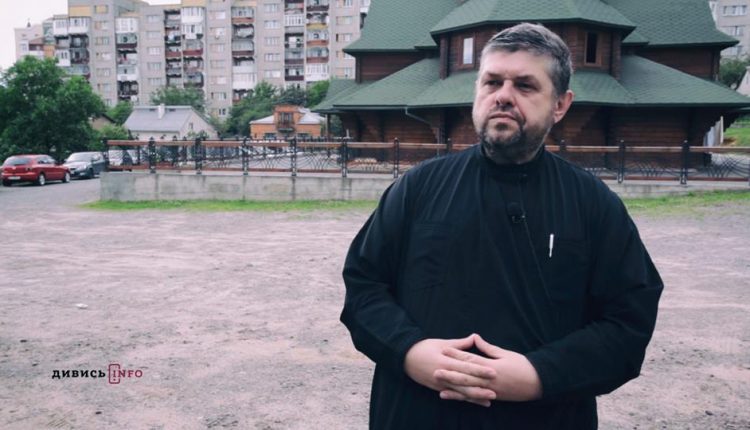
In July 2014, Igor Girkin arrived in Donetsk and proclaimed himself the “Minister of Defense”. Together with him, many militants from the territory of the Russian Federation arrived in the city, publicly expressing fanatical views and religious intolerance. In early August 2014, the tent of the Prayer Marathon was once again destroyed, and priest Oleksandr Khomchenko was abducted. Before his abduction, Oleksandr Khomchenko managed to call Muslim Mufti Said Ismagilov and warn him that another action of repression against the participants of the Prayer Marathon had begun. This saved the life and freedom of the Muslim mufti from Donetsk, and he managed to urgently leave the occupied territories.
Oleksandr Khomchenko was brought to Makiivka, a neighboring city of Donetsk, where he was charged with recruiting people to sects. During the four days of his captivity, he was subjected to numerous tortures, beatings, suffocation, and a mock execution. In 2018, after prolonged illnesses that began after his release from captivity, Oleksandr Khomchenko died.
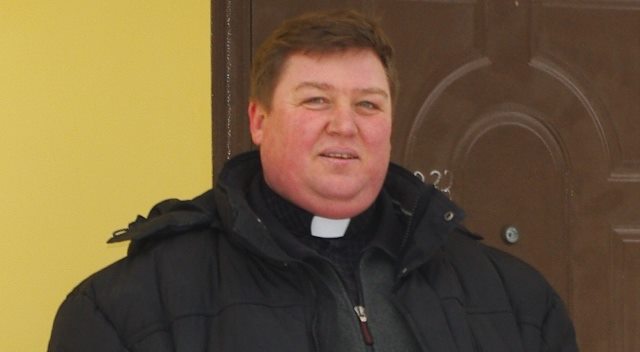
Also, in July 2014, militants illegally detained a priest of the Ukrainian Greek Catholic Church, Tikhon Kulbaka. During the 10 days of his detention, representatives of the repressive bodies of the self-proclaimed republic abused the priest, denying him medical care, despite the fact that they knew he had diabetes. Tikhon Kulbaka was taken to the execution site three times and the execution was imitated by shooting near his head. The result of this torture was an acquired heart disease and complications related to diabetes. As of now, Tikhon Kulbaka has undergone a number of major surgeries. He currently lives in the city of Lviv, where he is a church rector.
Testimony of Father Tikhon about his time in captivity: “He (a pro-Russian militant) pushed me and I hit the wall. He hit my head against the wall and ordered me to pray. I started to read the Lord’s Prayer. Then I heard the sound of a pistol reloading and a series of automatic shots. My ear felt hot from the hot air of the shots, and I realized that they were aiming at the wall next to my head. I could feel pieces of plaster falling from the wall onto my head. It was really loud, deafening. I lost consciousness. When I came to, I was lying on the wet ground outside. Everyone was laughing, I heard many voices outside the cell, not just two. They thought it was funny. Then they threw water on me, hit me and ordered me to get up again.”
During interrogations, he was convinced that he was a representative of a heretical faith that had no place in the occupied territory.
Catholic priests who participated in the Prayer Marathon also became victims of torture and abduction. Viktor Vonsovych, a priest of the parish of the Sacred Heart of Jesus, was abducted in Horlivka. After being held in captivity for ten days, he was forbidden to return to Horlivka under the threat of execution. Catholic priest Pavlo Vitek was detained in Donetsk. He was held captive in the premises of the former regional office of the Security Service of Ukraine.
Repressions against the Ukrainian Orthodox Church of the Kyiv Patriarchate were quite serious. The vast majority of parishes were closed by the occupation administration, and priests were included in public lists of those sentenced to death. This happened to Father Savva in Sloviansk, who was forced to flee the occupied city in May 2014. In the Novoazovsk district, the church of the Kyiv Patriarchate of the Ukrainian Orthodox Church was shelled, belongings and icons from the church were burned, and the house of priest Oleksandr Shumata was looted.
Two priests of the Ukrainian Orthodox Church of the Kyiv Patriarchate, Oleksandr Shumin and Valeriy Lotoriev, were abducted and beaten for organizing emergency medical care for wounded Ukrainian soldiers. Two more priests, Pavel Minkov and Yuri Ivanov, were abducted and, after interrogation, sent to labor camps.
The persecution of Protestant pastors in the occupied territory was systematic. During the occupation of Sloviansk, on June 9, 2014, Protestants were arrested after a Sunday service: Deacon Volodymyr Velychko, Deacon Viktor Bradarsky, Ruvim and Albert Pavenky, sons of a local pastor. They were held in the premises of the Security Service of Ukraine, where they were tortured and abused. Their bodies were found in a mass grave.
During the occupation of Sloviansk, the militants detained the bishop of the Evangelical Association of the Church of God, Oleksiy Demydovych, and Gennadiy Lysenko. The latter was interrogated with a knife, trying to find out about the church’s leaders and organizational structure.
In June 2014, the Word of Life churches were seized in Torez and Shakhtarsk in Donetsk region, and representatives of the clergy and laity were told that they would be shot if they continued their religious activities. Both buildings were later used as garrisons for militants’ activities and as weapons depots. In August 2014, the Word of Life church in Donetsk was seized.
The premises of the Christian University in Donetsk were seized and are now being used as a full-fledged military base, housing not only a garrison but also military equipment.
Due to militant violence, the Baptist Church in Donetsk was forced to cease operations. During the service, 30 militants arrived at the church building and told the congregation that if they gathered again, they would be shot. The church was taken by the militants for their own use, and most of the church members were forced to leave for Mariupol.
Systematic seizures of Protestant and Evangelical churches took place almost throughout the occupied territory (Sloviansk, Druzhkivka, Horlivka, Donetsk) and were accompanied by threats of physical violence against the parishioners of these churches, as well as physical harassment, torture and murder of local pastors.
Among the charges brought by the occupation administration against representatives of various churches are not only allegations that they are agents of third states, but also accusations of secretly supporting Ukraine and cooperating with official Ukrainian authorities. Despite the fact that the Western media and Ukrainian human rights activists have collected numerous testimonies of persecution on the grounds of religious intolerance, torture and murder of representatives of various communities, there are currently no signals that the agenda includes the conviction of participants and organizers of these events.
The Russian occupation of parts of Donetsk and Luhansk oblasts resulted in the establishment of the only official religious organization, the Ukrainian Orthodox Church of the Moscow Patriarchate, as well as the cessation of the activities of the vast majority of Protestant and Evangelical churches, and the activities of the Ukrainian Orthodox Church of the Kyiv Patriarchate. Due to the appropriation of church property and premises, persecution, and restrictions on freedom of assembly, some believers of different denominations were forced to leave the occupied territories or perform religious rites underground. For example, the activities of the Prayer Marathon in Donetsk continued underground in apartments or other facilities until March 2015.
In April 2018, Ukrainian human rights organizations published the Human Rights Agenda Appeal on freedom of religion in the occupied Crimea and in certain territories of Donetsk and Luhansk regions controlled by the Russian Federation. Fourteen human rights organizations demanded to initiate the preparation of a public report on the state of freedom of thought, conscience and religion in the occupied Crimea and in the Russian-occupied territories of Donetsk and Luhansk regions to be presented at specially organized hearings in the US Congress.
According to the findings of human rights organizations, in the occupied territories of Donetsk and Luhansk regions, most religious communities have ceased to exist, and freedom of thought, conscience and religion is non-existent.
Stanislav Fedorchuk, specially for fpdi.org.ua